This chapter analyses best-available estimates of finance directed towards climate solutions and opportunities as well as finance exposed to greenhouse gas intensive activities. The chapter places those estimates in the context of total financial flows and stocks, while acknowledging remaining gaps in data and approaches to comprehensively reflect the state of the climate transition. The analysis covers trends in real-economy investments, financial assets issued or held, and private financial institutions. Regional and sectoral estimates are provided where possible. The analysis helps identify opportunities for decision and policymakers to drive finance towards opportunities stemming from the climate transition.
OECD Review on Aligning Finance with Climate Goals 2026
Different Policy Playbooks, Untapped Investment Opportunities

Abstract
Global low-carbon energy investments account for a growing share of total real-economy investments, increasingly exceeding those in fossil fuel energy. Global investments in low‑carbon energy accounted for 7% of gross fixed capital formation in 2024 and those in fossil fuels represented 4%. Low‑carbon energy investments grew, notably in Asia-Pacific, Europe, and North America, while fossil fuel investments stagnated. Greenfield foreign direct investment contributed to these trends. Low-carbon investments in Africa, Eurasia, Latin America, and the Middle East lag, indicating untapped opportunities to invest in climate transition and innovation.
Climate-alignment trends in the real economy and major parts of the financial system have yet to converge. In contrast to real-economy investments, fossil fuel financing continues to outpace low-carbon financing across most asset classes. Conventional financing to other GHG-intensive industrial and energy sectors is also several multiples, pointing to large, untapped opportunities to invest in the climate transition. Alignment of finance and investments with climate adaptation and resilience remains, however, difficult to track.
Listed corporate equity shares in low-carbon sectors are highest in regions with large stock markets, but considerable scope remains to transition stock markets globally. At the end of 2025, global low-carbon listed equity accounted for one-third of carbon-intensive stocks and 5% of total listed equity. Low-carbon shares are highest in North America and Eastern Asia, which represent over 70% of global markets. Africa, Oceania and Latin America have over 20% of listed equity in GHG-intensive sectors but account for only 3% of global markets.
Low climate alignment of corporate bonds and syndicated loans points to untapped potential of different financial instruments to finance low-carbon solutions. Global green corporate bond issuance plateaued after 2022 and did not keep up with growth of total issuance, while the share of traditional bonds from fossil fuel sectors slightly fell between 2022 and 2025. Green syndicated loans rose while syndicated loans to fossil fuel sectors fell. Regional differences persist. Green-labelled only exceeded traditional issuance in Africa, Europe and parts of Asia-Pacific for corporate bonds and in Eastern Asia and Oceania for syndicated loans.
Data and methodological constraints limit evidence on the role of sovereign bonds and private markets in aligning finance with climate goals. Data gaps in private equity and bilateral loans prevent evaluations of their role in financing climate innovation and transition in the real economy. Public authorities rely on sovereign bonds but green bonds remain a very small share of total issuance and no common approach exists to assess unlabelled bonds.
Banks still channel more financing to fossil fuels than low-carbon energy but better evidence for other types of financial institutions is needed to understand the diverging climate alignment of real-economy and financial system flows. Bank-facilitated financing to fossil fuels still exceeded low-carbon energy supply in 2024. However, the gap narrowed since 2021 as banks across all regions captured more green finance opportunities. The highest relative growth in low-carbon bank-facilitated financing was in Africa, but the largest volume increase was in Europe. Evidence on other types of financial institutions remains very partial.
Climate-alignment assessments at the level of financial jurisdictions help map untapped investment opportunities in climate solutions and transition. National collaboration across policy authorities can improve the coverage of climate assessments. Voluntary national commitments under the G20 Data Gaps Initiative are expected to yield first official estimates of green debt securities and listed equities. Dedicated efforts remain needed to assess finance exposed to high-GHG activities and physical climate risks.
Consistent with the systematic approach that underpinned the first OECD Review on Aligning Finance with Climate Goals (see (OECD, 2024[1]) and Box 3.1), this chapter on tracking analyses the climate alignment across layers of finance. It summarises trends in real-economy investments in low-carbon energy and fossil fuel supply (Section 3.1), brings together different estimates across asset classes (Section 3.2), takes stock of emerging analysis on the portfolios of financial institutions (Section 3.3), and reflects on how data across the previous three sections can be combined to assess the climate alignment of financial jurisdictions (Section 3.4). With the aim to address the broader Article 2.1c goal to make all finance consistent with climate goals, the chapter places available figures in the context of total investments and financing flows and stocks, while acknowledging ongoing methodological and data developments towards more comprehensive metrics and assessments, as further discussed in Chapter 4 on metrics.
Assessing the climate alignment of finance requires considering all layers of the real economy and financial system. To do so, the approach that underpins recurring OECD Reviews on Aligning Finance with Climate Goals considers four layers: real-economy assets and investments, financial assets and portfolios, financial institutions, and financial jurisdictions (Figure 3.1). Within each of these layers, both financial stocks and flows need to be tracked, providing complementary yet interrelated insights. This edition extends the analysis by introducing time trends, unpacking previously “unclassified” segments, and providing regional insights.

Source: (OECD, 2024[1]).
There are two main challenges in estimating the alignment of finance with climate goals across these layers, namely data gaps and varying definitions. Data and estimates come from different sources, which may identify and classify activities that contribute to or undermine climate goals in a way that is not fully consistent. Further, estimates of finance for activities that contribute to or undermine climate objectives may be partial. Such gaps are even more acute for climate change adaptation than for climate change mitigation (as further discussed in Chapter 4 on Metrics), which explains why only a few examples relating to resilience to climate change are included in the present chapter. More generally, estimates of finance to activities that contribute to or undermine climate objectives tend to be less comprehensive for developing countries and unlisted companies (World Bank Group, IMF and OECD, 2023[2]), as well as for asset classes not traded on financial markets.
Comprehensive climate-alignment assessments of real-economy investments are critical to assess climate policy effectiveness in capturing climate-related economic opportunities. Existing official taxonomies (discussed in Chapter 2 on policies) are both too partial and not specific enough to provide definitions and criteria across all economic sectors and subsectors. In this context, the evidence presented here remains focused on estimates of clean energy investments and fossil fuel-related investments. These are compared to total real-economy investments, for which gross fixed capital formation (GFCF), an official statistical indicator pertaining to the System of National Accounts, can serve as an approximate benchmark (Jachnik, Mirabile and Dobrinevski, 2019[3]).
3.1.1. Global and regional investment trends
The share of low-carbon energy investments in total global real-economy investments has increased and significantly exceeds the share of fossil fuel investments. Investments in renewable power and other clean energy, such as electricity networks, storage, electrification of end use, and energy efficiency, accounted for 6.9% of gross fixed capital formation in 2024 (Figure 3.2). Meanwhile, investments relating to fossil fuels represented 4.1%. While more recent data on gross fixed capital formation is not yet available, 2025 estimates of clean and fossil fuel energy investments are on the same trend. In 2025, low-carbon energy investments exceeded fossil fuel energy investments by the largest margin yet. The overall alignment of real-economy investment with climate-mitigation goals remains limited but progress observed in the energy sector is critical to the climate transition in other economic sectors.
Significant growth of low-carbon energy investments since 2020 drives their increasing share in total investments, while fossil-related investments remained relatively stable. Between 2020 and 2025, global clean energy investments increased significantly, rising from USD 1.3 trillion to USD 2.1 trillion, reaching an all-time high (Figure 3.2). This reflects both sustained growth in renewable power investment and increasing investments in other clean energy (such as grid infrastructure investments), which added up to USD 0.9 trillion and USD 1.4 trillion respectively in 2025. With just under USD 1.2 trillion investments relating to fossil fuels in 2025, the latter neither increased not faltered.
Less than 12% of total real-economy investments can currently be tracked for climate alignment, as the climate transition of many sectors remains difficult to accurately assess. The climate transition of many economic sectors, representing over 85% of real-economy investments. remains difficult to accurately assess systematically. Consistency with low-GHG emissions pathways requires shifting investments across all economic sectors including but not limited to energy. Although not yet tracked systematically, investments in solutions to support the transition of heavy industries, buildings, transportation, and agriculture exist. Improved tracking efforts at national levels could significantly contribute to filling this data gap.
At the global level, private sector represents the majority of investments in low carbon energy, while the public and private sectors are taking relatively even shares of fossil fuel investments. Real‑economy investments are made by both public (e.g. governments, national development banks, multilateral development banks) and private actors (e.g. companies, institutional investors, households). GFCF and the other estimates presented in this section cover real-economy investments by private and public actors. In 2024, the private sector represented over two thirds of clean energy investments, while public and sectors each accounted for about half of fossil fuel investments (Figure 3.3). Public investments in GFCF can represent anywhere from 10% to 50% depending on the country (OECD, 2024[1]).

Note: GFCF is gross fixed capital formation. Renewable power relates to investments in power generation from renewables. Other clean energy refers to investments in energy efficiency and other end uses, electricity networks, storage, nuclear power generation, and clean fuels. Fossil fuels relate to investments in fossil fuel supply and power generation from coal, oil, and natural gas.
Source: Authors, based on data retrieved from (World Bank, n.d.[4]; IEA, 2026[5]).

Note: Other clean energy refers to investments in energy efficiency and other end uses, electricity networks, storage, nuclear power generation, and clean fuels. Fossil fuels relate to investments in fossil fuel supply and power generation from coal, oil, and natural gas.
Source: (OECD, 2025[6]) via (IEA, 2025[7]).
Over 2021-2025, low-carbon energy investments outpaced fossil investments in Asia-Pacific, Europe, and North America. In all three regions, clean energy investments between 2021 and 2025 were significantly higher than between 2016 and 2020, while fossil fuel-related investments stagnated (Asia‑Pacific) or slightly decreased (North America and Europe) between the two periods (Figure 3.4). In the Middle East, fossil fuel investments remain multiple times larger than clean energy investments.
Trends in Latin America, Eurasia and Africa illustrate remaining challenges to invest in the energy transition in emerging and developing countries. Clean energy investment over 2021‑2025 increased in all three regions compared to the previous five years (Figure 3.4), highlighting regional progress despite diverse country contexts, economic structures, and transition pathways (IEA, 2025[7]). However, across the three regions, fossil investments remain higher than clean energy investments, and most notably in Eurasia (a fossil fuel exporting region). In Africa, total energy investments remain particularly low in absolute terms compared to the size of the continent and needs, underscoring the persistent financing gap for developing economies (IEA, 2025[7]).

Note: Renewable power relates to investments in power generation from renewables. Other clean energy refers to investments in energy efficiency and other end uses, electricity networks, storage, nuclear power generation, and clean fuels. Fossil fuels relate to investments in fossil fuel supply and power generation from coal, oil, and natural gas.
Source: Authors, based on data retrieved from (IEA, 2025[8]).
Large shares of real-economy investments beyond low-carbon and fossil energy pertain to economic sectors of direct relevance to the climate transition. Current global-level data on total GFCF, as presented in Figure 3.2, does not lend itself to a sectoral analysis across countries. This limitation prevents tracking investment volumes going to climate-relevant sectors such as transportation, heavy industries, buildings. However, such sectors can account for more than half of total real-economy investments, as is the case for European countries within the OECD membership (Figure 3.5) and thus represent significant opportunities for green and transition finance across financial asset classes tracked in Section 3.2 of this chapter. As discussed in Section 3.4, jurisdiction-level analyses based on national granular data can go further in such assessments, linking to national economic structures and policy priorities.

Note: Categorisation in climate policy-relevant sectors, following the approach proposed by Battiston et al (2022[9]).
3.1.2. Role and trends of greenfield foreign direct investment
Foreign direct investment (FDI) represents a significant channel through which cross-border capital influences the real economy over the medium and long term. Greenfield FDI, although a relatively small proportion of total FDI (the majority of which consists of investments in existing companies including mergers and acquisitions) is particularly relevant to climate alignment as it establishes new productive capacity in recipient economies. The sectoral orientation of such investment, notably within the energy sector, contributes to shaping the long-term emission profile of economies and can either contribute to or limit progress toward climate goals (OECD, 2022[10]). Aligning FDI patterns with climate objectives requires a combination of policies that strengthen incentives for low-carbon investment, improve transparency on the climate implications of investment projects, and ensure that structural capital formation is consistent with net-zero pathways (OECD, 2022[10]).
Available evidence shows that between 2016 and 2025, the climate alignment of global greenfield FDI improved significantly. The OECD FDI Qualities (FDIQ) indicators highlight that that greenfield investment in renewable energy more than doubled, going from less than USD 90 billion in 2016 to around USD 200 billion in 2025. The expansion of renewable energy investment was significant in absolute terms and relative to total greenfield FDI. The share of renewable energy in total greenfield FDI more than doubled, rising from 10% in 2016 to around 25% between 2022 and 2024, before dropping to 15%% in 2025. In contrast, greenfield FDI in fossil energy remained volatile and did not keep pace with overall growth, declining from about USD 120 billion in 2016 (14% of total greenfield FDI) to less than USD 70 billion in 2024 (4% of total greenfield FDI) (OECD, 2024[11]).

Note: FDI refers to foreign direct investment, RE is renewable energy greenfield FDI, FF is fossil fuel greenfield FDI.
Greenfield FDI in renewable energy is no longer concentrated in advanced economies as it outpaces greenfield FDI in fossil fuel energy in all regions. The share of advanced economies as beneficiaries of greenfield FDI in renewable energy fell from 57% in 2016-2020 to 54% in 2021-2025, while EMDEs rose to 46%. As a result, renewable energy now accounts for a broadly comparable share of total greenfield FDI across both groups, suggesting a potential convergence in investment priorities. By contrast, fossil fuel greenfield FDI has declined everywhere but remains far more prominent in EMDEs, which received around 70% of the global fossil total in 2021–2025.
The estimated share of greenfield FDI in total investments in renewable energy is significant and has grown strongly over the past decade in both advanced economies and EMDEs. During 2016-2021, greenfield FDI represented about just under a third of total renewable energy investments (as tracked by the IEA) in advanced economies and just under a fifth in EMDEs. During the 2021-2025 period, these shares grew to about half for advanced economies and about a third for EMDEs. While the scope of the different datasets that underpin these estimated shares are not fully comparable, such findings confirm that the growing technological maturity and economic attractiveness of the renewable energy sector across countries.
Climate alignment of energy-related greenfield FDI improved across regions but at different speeds and scales. Over 2016-2025, renewable energy FDI increased across all regions, whereas investment in fossil energy generally declined, with North America as an exception. There, however, remains notable regional differences (Figure 3.7). In 20121-2025 more than one-third of global renewable energy greenfield FDI was directed to Europe (32%), followed by Africa (21%) and the Asia-Pacific (21%). By contrast, fossil energy-related greenfield FDI remained more concentrated in Central and South America and the Caribbean (24%), the Asia-Pacific (17%) and North America (18%).

Financial flows and stocks across asset classes play different roles in financing real-economy investments in climate innovation and transition. For example, primary equity markets enable early‑stage and growth companies to capitalise on future growth of climate solutions, while debt provides most financing for established companies, including in traditionally GHG-intensive sectors (Wilson and Caldecott, 2023[13]). Each asset class carries distinct time horizons, risk profiles, disclosure practices, and channels of influence on real-economy investment decisions. Flows and stocks of financial assets are several times larger than flows and stocks of tangible fixed assets, which can be explained by the fact that significant volumes of financial intermediation and secondary financial market activity are linked, on average, to each tangible fixed asset or real economy entity.
Climate-alignment trends in the real economy and major parts of the financial system have yet to converge. In contrast to real‑economy investments, global fossil fuel financing continues to outpace low‑carbon financing across most asset classes with comparable data, both in new flows and outstanding stocks (Figure 3.8, Panels A and B respectively). In 2025, green-labelled syndicated loans accounted for 5% of issuance, compared with 6% for lending to fossil fuel sectors. Low-carbon and fossil fuel corporate bonds each represented around 4% of total flows, pointing to higher alignment than in syndicated loan markets albeit in an asset class with a smaller overall size. Green-labelled sovereign bonds accounted for only 1% of issuance, with no estimate available for fossil fuel-related issuance. Resulting stocks of green-labelled or low-carbon corporate debt, sovereign bonds and listed equities were under 6% of total volumes, while fossil fuel-related stocks accounted for 5% to 7% where measured. Other GHG- or energy-intensive sectors for another 20% to 30%. This adds up to several multiples of shares of financing to low-carbon sectors, pointing to large, untapped opportunities to invest in the climate transition.
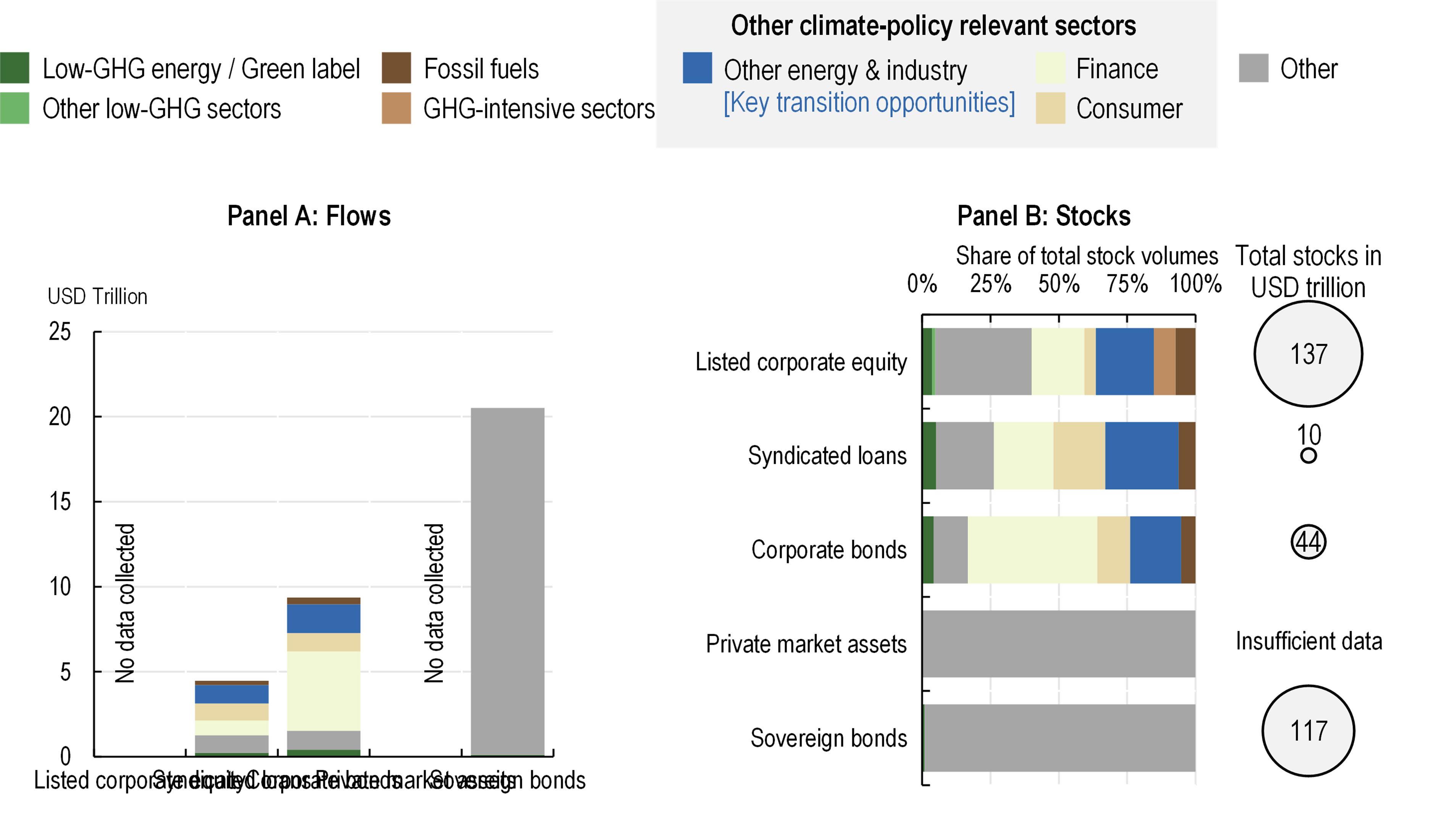
Note: This figure combines data from figures throughout Section 2.2. Methodological notes, especially in relation to low-carbon and carbon-intensive classifications can be found in their respective subsections. GHG refers to greenhouse gas. Other low-carbon sectors and GHG-intensive sectors are only identified for listed corporate equities. Greem labelled refers to low-carbon energy sectors in listed corporate equity and green-labelled instruments for other asset classes.
Source: Authors, based on data retrieved from Bloomberg, BloombergNEF, LSEG.

Note: This chart shows the evolution of flows and stocks in low-GHG (green arrows) and fossil fuel (brown arrows) sectors across asset classes.
Source: Authors, based on data retrieved from Bloomberg, BloombergNEF, LSEG.
Climate alignment advanced in parts of the financial system but the greening of bond markets lost momentum since 2022. Since the first edition of the OECD Review (2024[1]), which mainly tracked data until 2022, alignment in syndicated loans progressed, stood mostly still in listed equity and sovereign bonds, and lost momentum for corporate bonds (Figure 3.9). Flows of green-labelled corporate bonds increased but did not keep up with overall growth in bond issuance, resulting in a decreasing share.
Large opportunities to transition investments globally remain untapped across financial asset classes. Low climate alignment of syndicated loan and corporate bond issuance points to untapped potential in using different financial debt instruments to finance low-carbon solutions (Figure 3.8). Traditional bond and loan issuances in energy and industrial sectors remain larger than green-labelled and fossil fuel-related issuances by a factor of two or more. Green- and transition-labelled instruments have the potential to be further scaled up significantly in these sectors to finance climate transition and innovation. Many financial sector policies, as discussed in Chapter 2 on policies, are targeting the transparency and comparability of these instruments to make them more attractive to investors. However, more barriers need to be overcome to scale them.
Climate-alignment assessments of the financial sector are most credible at the asset class level, acknowledging different approaches in alignment classifications. Sectoral classifications for listed equity are more detailed than for debt instruments allowing more policy-relevant insights of the climate alignment of finance. Data and methodological constraints limit evidence on the role of sovereign bonds and private markets in aligning finance with climate goals. Mortgages and real estate are not yet fully captured in this report, but information on buildings across asset classes provides initial insights on these financial assets. The different aspects, which are further discussed in Chapter 4 on metrics, highlight the importance of assessing climate alignment separately for different asset classes, as done in the following subsections.
3.2.1. Listed corporate equity
Listed corporate equity is the largest asset class in terms of stocks, can be tracked most comprehensively, and has the most detailed information available to assess climate alignment. Total market capitalisation of global listed equities grew to nearly USD 140 trillion in 2025. Apart from initial public offerings and capital increases, equity markets do not usually finance new investment in the same direct way than new debt issuance, but they affect firms’ ability to raise capital, expand, acquire assets and sustain long-term investment plans (OECD, 2021[14]). In this context, the composition of listed equity companies in low-GHG, high-GHG and climate-relevant sectors is a useful indicator to assess how financial markets are transitioning. However, other metrics can be used to assess climate alignment of listed equities, which are further explored and explained in Chapter 4 on metrics.
Listed corporate equity in low-carbon sectors represent a third of those in GHG-intensive sectors and only a small share of total stocks. The market capitalisation of listed companies in low-carbon sectors was estimated at USD 6.6 trillion in 2025, representing 5% of total listed equity (Figure 3.10). In contrast, listed equity in fossil fuel energy supply was estimated at around USD 10 trillion in 2025 with an additional USD 11 trillion in other GHG-intensive sectors, together accounting for over 15%. This suggests that the climate alignment of listed equity remains low, with low-carbon sectors still representing a much smaller share of market value than fossil fuel and other GHG-intensive sectors.
With over two thirds of listed corporate equity in climate-relevant sectors other than exclusively low-GHG or GHG-intensive sectors, large transition opportunities remain untapped. In 2025, USD 62 trillion of global listed equity corresponded to companies whose activities are mixed, downstream, or cannot be classified by a specific low-carbon or fossil fuel activity or segment but are climate relevant according to the methodology by Battiston et al (2022[9]) (Figure 3.10). This includes listed equity in companies that operate in energy-intensive industries, utilities, buildings, transport, and finance sectors, which adds up to over 40% of listed corporate equity stock. Financing the decarbonisation pathways of these companies is essential for meeting national and global climate mitigation goals while stimulating low-carbon innovation. Taken together with low market shares in low-carbon sectors, this points to large opportunities to transition global equity markets.

Note: Categorisation in low-carbon, fossil fuel, and climate policy-relevant sectors, following the approach proposed by Battiston et al (2022[9]).
Source: Authors, based on data retrieved from Bloomberg, 2025.
Between 2020 and 2025, listed equity valuations in fossil fuels have always remained higher than those in low-carbon energy, with shares of both remaining stable. The absolute market value of low‑carbon firms has grown since 2020, from USD 5.3 trillion in 2020 to USD 6.6 trillion in 2025 (Figure 3.10). It continues to represent a small share of total listed equity holdings, underscoring the limited depth of publicly listed firms exclusively engaged in low-emissions activities. The share of listed equity in fossil fuel and carbon-intensive sectors have remained a stable multiple.
Larger regional markets tend to have higher shares of listed equity stocks in low-carbon sectors. North America and Eastern Asia, which represent over 70% of global listed corporate equity markets, have some of the highest shares listed in low-carbon sectors, at around 5% and 6% respectively (Figure 3.11). Oceania, which represented 1% of the stock market in 2025, slightly exceeds this at 7%. Fossil-fuel equities represent a larger share of listed markets in regions where extractive and energy‑intensive industries play a greater economic role or where investments in clean technologies are low. Notably, Africa, Oceania and Latin America have over 20% of listed corporate equity in GHG‑intensive sectors, but these regions together only add up to 3% of global markets. This is also the case for other Asian countries outside of Eastern Asia, which account for 8% of the global stock market.

Note: Categorisation in low-carbon, fossil fuel, and climate policy-relevant sectors, following the approach proposed by Battiston et al (2022[9]).
Source: Authors, based on data retrieved from Bloomberg, 2025.
3.2.2. Corporate bonds and syndicated loans
Debt is a core source of financing for non-financial and financial corporates, including to invest in the climate transition. As of 2024, based on national financial accounts statistics, the average corporate debt to equity ratio in most OECD member countries was above two, and between three and 10 in more than half (OECD, n.d.[15]). Companies in established sectors rely largely on debt (bonds and loans) to finance their green and climate-related investments (ICMA, 2025[16]; Cortina Lorente et al., 2025[17]; OECD, 2022[18]). Further, some forward-looking scenario analysis highlights the critical role that debt markets will play in financing the climate transition (OECD, 2025[19]).
Assessments of the climate alignment of bonds and loans currently rely on a mix of green labels and sectoral analysis. Bonds and loans can be explicitly labelled as sustainability-, green-, or transition-related. These labels identify environmental objectives through use-of-proceeds commitments or performance-linked terms, drawing on jurisdiction-specific taxonomies and frameworks (analysed in Chapter 2 on policies, Section 2.1.1) or international frameworks, including the ICMA Green Bond Principles (ICMA, 2025[16]). While the additionality of green-labelled bonds has sometimes been questioned (as discussed in Chapter 4 on metrics), such labelling remains the most credible basis for tracking debt flowing to climate mitigation or adaptation objectives and environmental performance more broadly. In contrast, as no debt financing is earmarked for use in carbon-intensive activities, identifying climate-misaligned debt requires an analysis of the sectoral classification and activities of the borrower. A more comprehensive assessment of the climate alignment of debt financing requires better coverage of bilateral loans (no public data) and complementary metrics such as issuers’ carbon intensity and firm-level transition trajectories (further discussed in Chapter 4 on metrics, Section 4.5).
Corporate bonds
Outstanding amounts of green-labelled corporate bonds increased steadily since the Paris Agreement but still lag traditional bonds in fossil fuel sectors and remain a small share of overall stock. Green-labelled corporate bond stocks grew from USD 0.5 trillion in 2020 to USD 1.9 trillion in 2025 (Figure 3.12). As outstanding corporate bonds grew to USD 44 trillion globally in 2025, green-labelled bonds thus accounted for 4% of total bond stocks. This is still below fossil fuel sector bonds, which account for 5% of total corporate bond stocks in 2025. Traditional bonds to other energy sectors, utilities and industry represented another 19% of total outstanding amounts. Although shares of green-labelled bonds increased and traditional bonds in energy- and emissions-intensive sectors decreased, the latter remains a multiple of the former.

Note: Green-labelled bonds are bonds for which the issuer states that the net proceeds of the instrument include environmental projects or activities or the issuer has self-reported that some instrument proceeds will finance projects or activities that have environmental purposes. This can be issued by any sector. Non-labelled (traditional) bonds follow the Bloomberg Industry Classification Standard (BICS). Fossil fuel sectors include, at BICS Level 2: Coal Operations, Exploration & Production, Integrated Oils, Oil & Gas Services & Equipment. The dataset used to calculate the outstanding amount includes both active and inactive bonds, issued between 01/01/2000 and 31/12/2025, with a tenor at issuance greater than 1 year, and an issued amount greater than USD 1 million.
Source: Authors, based on data retrieved from BloombergAnywhere, 2025.
Greening of corporate bond issuance has lost momentum since 2022. Although global green bond issuance volumes have continued to rise, they did not keep pace with growth of total corporate bond issuance. Green-labelled corporate bond issuance grew from USD 0.1 trillion in 2016 to USD 0.4 trillion in 2025, but its share in total issuance peaked at 5.3% in 2022 before falling to 4.5% in 2025 (Figure 3.13). Most green-labelled corporate bonds are issued by companies active in low-carbon sectors and corresponding supply chains. Transition-labelled bonds were estimated at 0.1% of total corporate bond issuance in 2025, a still very small emerging labelled debt instrument. At the same time, traditional corporate bond issuance by fossil fuel companies, which declined from 6% to 3% of total issuance between 2016 and 2022, rose back to 4% in 2025. Issuance of green-labelled bonds exceeded traditional bond issuance by fossil fuel sectors four years in a row, but the gap is narrowing.
Opportunities to rely more on corporate bond instruments to finance transition activities and climate innovation remain large. Traditional corporate bonds to industrial and electricity sectors represented 18% of total corporate bond issuance in 2025 (Figure 3.13). These sectors need to undergo large transformations to transition to net-zero GHG emissions. Green- and transition-labelled corporate bonds can be scaled up to finance these transitions. Another 61% of corporate bond issuance is in other climate‑policy relevant sectors, that could gain financial returns from investing in climate solutions and transition. Corporate bonds issued by financial institutions represent a large part of this. Bank financing through bond issuance is critical to the ability of these institutions to extend debt financing to climate‑relevant real economy sectors, but the climate performance is particularly complex and data intensive to track.

Note: Green-labelled bonds are bonds for which the issuer states that the net proceeds of the instrument include environmental projects or activities or the issuer has self-reported that some instrument proceeds will finance projects or activities that have environmental purposes. This can be issued by any sector. Non-labelled (traditional) bonds follow the Bloomberg Industry Classification Standard (BICS). Fossil fuel sectors include, at BICS Level 2: Coal Operations, Exploration & Production, Integrated Oils, Oil & Gas Services & Equipment. The dataset used to calculate the outstanding amount includes both active and inactive bonds, issued between 01/01/2000 and 31/12/2025, with a tenor at issuance greater than 1 year, and an issued amount greater than USD 1 million.
Source: Authors, based on data retrieved from BloombergAnywhere, 2025.
Some regions are capturing opportunities of financing their climate transition through green bonds more than others. Between 2021 and 2025, green bond issuance accounted for between 2% and 12% of total corporate bond issuance depending on the region (Figure 3.14). Europe and Africa recorded the highest relative shares (8% to 12%), while the Americas and Asia-Pacific exhibited lower proportions of green-labelled issuance (2% to 5%). Green-labelled corporate bond issuance in Africa, Europe and parts of Asia-Pacific exceeded traditional corporate bonds issued by fossil fuel companies, while the opposite remains true in parts of Asia and the Americas. Europe was also the main driver of green bond volumes, representing over half of green bond issuance between 2021 and 2025.
Regions with the highest shares of green bond issuance, also have some of the lowest shares of traditional bond issuance by fossil fuel companies. Green-labelled corporate bond issuance in Europe and Africa outpaced traditional corporate bonds issued by fossil fuel companies in those regions by a factor of two to four. Green-labelled also exceeded traditional issuance in parts of Asia-Pacific. On the other hand, traditional corporate bonds issued by fossil fuel sectors were still higher than green-labelled issuance in parts of Asia (including the Middle East) and the Americas. These regional differences in the climate alignment of corporate debt instruments are reflective of varied economic structures and different climate transition needs across sectors.

Note: Green-labelled bonds are bonds for which the issuer states that the net proceeds of the instrument include environmental projects or activities or the issuer has self-reported that some instrument proceeds will finance projects or activities that have environmental purposes. This can be issued by any sector. Non-labelled (traditional) bonds follow the Bloomberg Industry Classification Standard (BICS). Fossil fuel sectors include, at BICS Level 2: Coal Operations, Exploration & Production, Integrated Oils, Oil & Gas Services & Equipment. The dataset used to calculate the outstanding amount includes both active and inactive bonds, issued between 01/01/2000 and 31/12/2025, with a tenor at issuance greater than 1 year, and an issued amount greater than USD 1 million.
Source: Authors, based on data retrieved from BloombergAnywhere, 2025.
Syndicated loans
Syndicated loans allow participating banks to share credit risk, a feature of relevance to financing solutions and innovation for the climate transition. Syndicated loans combine features of bilateral lending and publicly traded debt. While originated by banks, they have evolved to share some features of bonds in key respects. They are often syndicated to non-bank institutional investors, structured off banks’ balance sheets, tranched by risk, and traded in secondary markets (Cortina Lorente et al., 2025[17]). Syndicated loans are a much smaller asset class compared to corporate bonds, and only a fraction of all lending. Lending more broadly also includes private lending to corporates and households (partly captured in Section 3.2.4), such as mortgages, which cannot similarly be tracked due to the confidential nature of the data and absence of disclosures.
The volume and share of green syndicated loans have been growing steadily since the Paris Agreement but remain lower than for fossil fuel activities. This trend can be observed for both stock and flows. In contrast to lost moment in corporate bond markets, green-labelled syndicated loans have been growing steadily. At the global level, green-labelled outstanding syndicated loan stock and new tranched loan flows reached 5% of in 2025 (Figure 3.15 and Figure 3.16). At the same time, traditional syndicated loans to fossil fuel sectors fell to 6% of total volumes in 2025. Hence, although the climate alignment of syndicated loans is advancing, traditional loans to fossil fuel sectors still exceed green‑labelled loans as of 2025.
As is the case for other asset classes, climate-relevant sectors other than purely low-GHG or fossil fuel activities represent large volumes of syndicated loan flows and stocks. Conventional syndicated loans to non-fossil fuel energy and industry sectors represented 27% of total loan issuance in 2025 (Figure 3.16). Another 41% was in other climate-policy relevant sectors, such as transport, buildings and finance. These large shares point to untapped opportunities for syndicated loans to contribute to financing the climate transition at a larger scale.

Note: Green-labelled loans are loans for which the issuer states that the net proceeds of the instrument include environmental projects or activities, or the issuer has self-reported that some instrument proceeds will finance projects or activities that have environmental purposes. Non-labelled (traditional) loans follow the Bloomberg Industry Classification Standard (BICS). Fossil fuel sectors include, at BICS Level 2: Coal Operations, Exploration & Production, Integrated Oils, Oil & Gas Services & Equipment. The dataset includes both active and inactive loans, issued between 1/01/2015 and 30/06/2025, with a tenor at issuance greater than 1 year.
Source: Authors, based on data retrieved from BloombergAnywhere, 2025.

Note: Green-labelled loans are loans for which the issuer states that the net proceeds of the instrument include environmental projects or activities or the issuer has self-reported that some instrument proceeds will finance projects or activities that have environmental purposes. Non-labelled (traditional) loans follow the Bloomberg Industry Classification Standard (BICS). Fossil fuel sectors include, at BICS Level 2: Coal Operations, Exploration & Production, Integrated Oils, Oil & Gas Services & Equipment. For Panel B, industry classification follows the Bloomberg Industry Classification. The dataset includes both active and inactive loans, issued between 1/01/2015 and 30/06/2025, with a tenor at issuance greater than 1 year.
Source: Authors, based on data retrieved from Bloomberg Anywhere, 2025.
Volumes of green-labelled syndicated loan issuance exceed traditional loan issuance to fossil fuel sectors in Eastern Asia and Oceania. In those regions green-labelled loan issuance was nearly 2 to 5 times unlabelled loan issuance to fossil fuel sectors between 2021 and 2025 (Figure 3.17). By contrast, Africa and Latin America have much higher shares of unlabelled loans allocated to fossil fuel sectors than green-labelled loan issuance across all sectors, although these regions represent a very small share of syndicated loan markets. North America also had a small share of syndicated loans as green labelled on average between 2021 and 2025, at around 3% while traditional loans to fossil fuel sectors accounted for 5%. As North America accounted for over half of loan issuance between 2021 and 2025, it drove down global average green loan issuance. Europe, which represents over a quarter of global loan markets, had similar volumes of green-labelled loan issuance and unlabelled issuance to fossil fuel sectors, each accounting for around 5% of European loan issuance total volumes.
Regional climate-alignment trends of corporate bonds and syndicated loans move in different directions. While Africa captured green finance opportunities through higher shares of green bonds, it retained the highest share of loan issuance towards GHG-intensive activities (Figure 3.14 and Figure 3.17). Europe, who drives over 50% of global green corporate bond issuance, has seen green corporate bond shares exceed traditional bonds to fossil fuel sectors, but this is not yet the case for syndicated loans.

Note: Green-labelled loans are loans for which the issuer states that the net proceeds of the instrument include environmental projects or activities or the issuer has self-reported that some instrument proceeds will finance projects or activities that have environmental purposes. Non‑labelled (traditional) loans follow the Bloomberg Industry Classification Standard (BICS). Fossil fuel sectors include, at BICS Level 2: Coal Operations, Exploration & Production, Integrated Oils, Oil & Gas Services & Equipment. For Panel B, industry classification follows the Bloomberg Industry Classification. The dataset includes both active and inactive loans, issued between 1/01/2015 and 30/06/2025, with a tenor at issuance greater than 1 year.
Source: Authors, based on data retrieved from Bloomberg Anywhere, 2025.
3.2.3. Sovereign bonds
Sovereign bonds is a large asset class and major financing instrument for national governments to invest in and support the climate transition, within the limits of debt sustainability. Global outstanding sovereign bonds are estimated at close to USD 120 trillion in 2025, more than double the size of the corporate-bond market (OECD, 2025[19]). Sovereign bonds’ interest rates vary depending on many factors notably relating to inflation levels and other economic conditions as well as to the trust that financial market players have in the country’s ability to service its debt. Such rate can be very low for many AEs but often reach two digits for many EMDEs. The impacts and costs of climate change can contribute to degrading the sustainability of sovereign debt, defined as the ability to meet all current and future payment obligations without exceptional financial assistance or going into default (IMF, 2020[20]).
Bonds explicitly aimed at financing climate action remain a very small and recently stagnating share of total official-sector bond issuance and stocks globally. As of 2025, outstanding volumes of green bonds (about USD 1 trillion) remained less than 1% of total outstanding official-sector bonds (over USD 117 trillion (Figure 3.18 Panel A). Between 2016 and 2021, green bond issuance by official-sector entities (sovereigns, sub-sovereigns, and government-backed entities as shown in Figure 3.18 Panel B) increased steadily in absolute terms but then stabilised around USD 250–300 billion per year over 2022-2025, as also observed in analyses dedicated to bond markets (OECD, 2025[21]). Since 2016, green bonds never exceeded 1.5% of total annual issuance (Figure 3.19). It is, however, not possible to put these shares in perspective of the share of unlabelled sovereign bonds, for which the use of proceeds goes to GHG-intensive activities.

Note: Green-labelled bonds are bonds for which the issuer states that the net proceeds of the instrument include environmental projects or activities or the issuer has self-reported that some instrument proceeds will finance projects or activities that have environmental purposes.
Source: Authors, based on data retrieved from BloombergAnywhere, 2025.
Green bonds were a very small share of total bond issuance in most regions between 2021 and 2025, except for Europe and Oceania. Between 2021 and 2025, European countries were the most active issuers of official green bonds, accounting for about two-thirds of the global sovereign green bond market. Consequently, green-labelled sovereign bonds represented around 5% of total issuance in Europe, followed by 4% in Oceania (Figure 3.20). During this same period, the share of green to total bond issuance was below 1% in Africa, the Americas and Asia. Governments could send more green debt market signals to corporates by raising capital through green and transition sovereign debt instruments.
The stagnation of green sovereign bond issuance indicates that official entities only partly rely on this instrument to finance their spending for the climate transition. Besides fiscal revenues, governments and local authorities’ climate action can also rely on funds raised through the issuance of general-purpose bonds. In such cases, there can be multiple explanations of the choice not to issue green bonds. It could relate to the current absence of a corresponding official green bond framework or label in a given jurisdiction (see Chapter 2 on policies, Section 2.1.1). It could also be explained by the possible absence of a lower borrowing cost for a green rather than a traditional bond issuance (OECD, 2025[21]).

Note: Green-labelled bonds are bonds for which the issuer states that the net proceeds of the instrument include environmental projects or activities or the issuer has self-reported that some instrument proceeds will finance projects or activities that have environmental purposes.
Source: Authors, based on data retrieved from BloombergAnywhere, 2025.

Note: Green-labelled bonds are bonds for which the issuer states that the net proceeds of the instrument include environmental projects or activities or the issuer has self-reported that some instrument proceeds will finance projects or activities that have environmental purposes.
Source: Authors, based on data retrieved from Bloomberg Anywhere, 2025.
Methodological challenges limit the evidence base on the role of sovereign in aligning finance with climate goals. Broadening climate assessments of sovereign bonds beyond green-labelled bonds is challenging but critical to strengthening the role of public debt in supporting the climate transition. Assessing the overall climate alignment of sovereign portfolios requires an approach to evaluate national climate objectives, sectoral spending patterns, and transition plans. As further discussed in Chapter 4 on metrics, there are opportunities to link sovereign bond frameworks to relevant climate-related goals and processes, such as Nationally Determined Contributions (NDCs) and green-budgeting practices. Such developments can broaden and strengthen the ability to infer the extent to which sovereign borrowing can be considered as contributing to low-GHG climate-resilient development, thereby responding to growing policy interest in strengthening the role of public debt markets in supporting climate transition (OECD, 2025[19]).
3.2.4. Private markets
Available estimates of private markets point to their important role in financing real-economy assets and entities, but it remains very challenging to draw overall conclusions on their state of climate alignment. While publicly traded bonds and equity represent by far the largest portions of the global investable market, private markets play a significant role for the real economy, notably for real estate and the building sector more generally, private companies and, to a lesser extent, infrastructure assets (MSCI, 2024[22]). As highlighted in Chapter 2 on policies, existing disclosure requirements focus on listed non-financial and financial companies. Data on private markets remains extremely scarce and fragmented (Noels and Jachnik, 2025[23]).
Investors in equity of entities not traded on stock exchanges can play an important role in financing real-economy sectors and supply chains relevant to the climate transition. Private companies represent a significant portion of economic activity in many sectors and geographies, taking the form of entrepreneurial start-ups, small and medium sized enterprises (SMEs) or established companies. Investors active in this asset class along the company growth curve include venture capitalists, growth equity investors, and private equity funds including leveraged buyout firms. The private company asset class can provide additional avenues to investors to seize opportunities from the climate transition through investments in companies providing climate solutions or enabling transition.
Initial and very partial estimates indicate that private equity investments in low-carbon activities caught up with fossil fuels. Private equity assets under management grew from USD 2.3 trillion in 2015 to around USD 9 trillion in 2024 (McKinsey & Company, 2025[24]; McKinsey & Company, 2024[25]). In that period, private equity invested capital in fossil fuel energy supply added up to USD 0.04 trillion, and a more or less equal USD 0.04 trillion was invested in low-carbon energy supply (Figure 3.21). Available estimates on venture capital point to significantly higher investments in low-carbon energy supply (USD 11 billion) than fossil fuel energy supply (USD 1 billion) for investments in start-up companies, a positive signal for the pipeline of future climate solutions. The low carbon to fossil fuel investment ratio is also estimated to have become mildly positive for private equity funds in growth companies.
Available data on infrastructure funds shows they invest the largest amount in low-carbon energy supply in private markets. Between 2015 and 2024, USD 187 billion was invested in low-carbon energy supply, compared to USD 105 billion in fossil fuels (Figure 3.21). This trend mirrors real-economy investment trends (presented in Section 3.1). Infrastructure funds invest in real assets (e.g. buildings and infrastructure) that typically provide public services, generate a steady cash flow-based return profile and are capital intensive, meaning they may be key for unlocking climate transition investments (BloombergNEF, 2025[26]).

Note: BloombergNEF analysis for private market funds active between 2015 and 2024.
Source: BloombergNEF.
Bilateral loans extended by credit institutions to corporates and households continue to represent a major blind spot for international level climate-alignment assessments. In contrast to publicly traded bonds and syndicated loans, for which transaction-level data make it possible to run climate-related assessments (Section 3.2.2), regular loans extended by commercial banks to their customers are not publicly recorded. Given the importance of such type of financing for investments by companies across sectors and households (e.g. real estate (mortgages) and transportation vehicles), filling this data and evidence gaps is a priority for more comprehensive and policy-relevant climate assessments of finance. While evidence available from analyses of banks’ portfolios based on commercial data (Section 3.3.1) faces similar limitations, data and assessment by financial supervision authorities in individual jurisdictions can play a significant role moving forward (Section 3.4).
Robust climate assessments of financial institutions still face significant data limitations as they need to cover their portfolios across asset classes. The extent to which financial institutions are capturing climate opportunities and reducing their exposure to climate misaligned activities, and contributing to climate action in the real economy is complex to assess. This is due to diversified portfolio structures across asset classes, including but not limited to the ones for which estimates are presented in Section 3.2. Analysing such structures requires access to detailed, often proprietary data, as well as requires methodological assumptions to aggregate results across business lines and assets. This leads to less robust results where large parts of portfolios cannot be included in the analysis and as estimates at the level of institutions can obscure diverging trends for different underlying segments of the portfolio (OECD, 2024[1]; Noels and Jachnik, 2022[27]).
The climate alignment of financial institutions is best tracked separately for different types of institutions. Various types of financial actors are involved in different financial activities on financial markets and in the real economy (as discussed in Chapter 4 on metrics). Multiple way of classifying financial institutions exist. At a minimum, banks and institutional investors need dedicated analysis, as set out by the first edition of the OECD Review (OECD, 2024[1]). Banks notably provide debt financing for real‑economy investments (discussed in Section 3.1). Institutional investors invest, depending on their mandates, in primary and secondary public and private markets.
3.3.1. Banks
Continued limitations in granular and standardised global data on banks’ holdings and new investments prevent a comprehensive climate assessment of their portfolios. In terms of holdings (stocks), total assets of commercial banks worldwide were estimated to add up to USD 191 trillion in 2024 (FSB, 2025[28]), growing by nearly USD 9 trillion compared to 2023. Looking at new investment and financing flows, best-available data enables tracking the climate-alignment of around USD 2 trillion of bank‑facilitated financing towards energy supply of nearly 1 400 large banks (BloombergNEF, 2025[29]). This includes recourse debt, public equity, project finance, and tax equity. Jurisdiction-level analysis of the climate alignment of banks can provide complementary insights based on more comprehensive national-level data sources held by central banks and financial supervisors (see Section 3.4).
Bank-facilitated financing flowing towards fossil fuels continues to outpace that flowing to low‑carbon energy supply, but the gap decreased between 2021 and 2024. Available data for close to 1 400 large banks indicates that they financed almost USD 1.1 trillion to fossil fuel energy supply in 2024, while just under USD 1 trillion went to low-carbon energy supply (Figure 3.22, Panel A). Bank‑facilitated financing to low-carbon energy supply decreased after 2021, from USD 1 trillion in 2021 to USD 0.8 in 2022. Low-carbon flows rose again since then but have not yet surpassed 2021 levels. On the other hand, annual fossil fuel financing by banks decreased since from USD 1.3 trillion in 2021 to just over USD 1 trillion in 2024, despite a slight rebound between 2023 and 2024. As a result, the gap between low-carbon and fossil fuel bank-facilitated financing is decreasing. The ratio of low carbon to fossil fuel financing, which was around 0.7 in 2021, advanced to 0.9 in 2023 and 2024.
Among a sample of 1 400 large banks, only institutions headquartered in Europe and Latin America finance more in low carbon than fossil fuel energy supply sectors. Bank-facilitated financing to low‑carbon energy is concentrated in Europe, North America, and Asia-Pacific. In 2024. banks headquartered in Europe accounted for USD 0.34 trillion of financing to low-carbon energy, followed by USD 0.30 trillion in Asia Pacific and USD 0.26 trillion in North America (Figure 3.22, Panel B). While banks in these regions also have the highest amounts of financing towards fossil fuel energy supply, European banks finance low-carbon activities by 60% more than fossil fuel activities, just behind Latin American banks where it is 80% more.
Banks captured more green finance opportunities in 2024 than in 2022 across regions, with the highest growth in Africa and the Middle East, and the largest volume increase in Europe. Between 2022 and 2024, annual low-carbon financing by European banks grew by USD 0.04 trillion to reach USD 0.35 trillion (Figure 3.22, Panel B). Although, financing to low-carbon energy by banks headquartered in Latin America and Africa and the Middle East remains very limited in size, it grew by 30% and 112% respectively between 2022 and 2024, the highest growth across regions. On the other hand, bank‑facilitated financing to fossil fuel supply increased from 2022 levels in Europe and North America, adding up to USD 0.21 trillion and USD 0.44 trillion in 2024 respectively. It decreased only in Asia Pacific, by 25%, and was relatively stable in Latin America as well as in Africa and the Middle East.

Note: Both panels include financing through recourse debt, public equity, project finance, and tax equity by around 1 400 large banks. In Panel B, the location of the capital raising entities is defined by the bank headquarters. In Panel B, LC is short for low‑carbon energy supply financing, and FF for fossil fuel energy supply financing by banks. Low‑carbon energy supply includes financing related to low‑carbon sources of energy production (including renewables, storage, biofuels and nuclear) and the development of plants/facilities manufacturing low‑carbon energy equipment (including equipment and services, such as modules, turbines, and components). Fossil fuel energy supply includes financing related to fossil‑fuel‑based sources of energy production (including coal, oil and gas, and utilities’ fossil‑fuel power generation for electricity and heating/cooling, as well as transportation and refining businesses) and the equipment used to support power generation from fossil‑fuel‑based sources (including equipment, parts and services, such as generators and boilers).
Source: BloombergrNEF, IJGlobal, RAN, Urgewald.
3.3.2. Institutional investors
Evidence on the climate alignment of institutional investors remains very scarce, partial, and fragmented. Institutional investors are a diverse set of financial sector actors, including pension funds, sovereign wealth funds, insurance companies, asset managers, endowments among others. Different tracking exercises may focus on different actors or the range of different assets they hold. Currently, only partial or anecdotal estimates are available across some actors. This may be in part due to less extensive disclosure requirements for institutional investors than for banks across geographies, as highlighted in Chapter 2 on policies.
Considering investment funds, they enabled on average twice as many fossil fuel than low-carbon energy capital expenditures in 2024 (Figure 3.23). This ratio has remained relatively stable since 2021. While there are some data gaps to track fund-enabled capital expenditures, investment funds pooled about a tenth of total energy supply capital expenditures in 2024 (BloombergNEF, 2025[26]). Equity funds enable more energy supply capital expenditure but also see a larger margin between low-carbon and fossil fuel energy investments, adding up to USD 45 billion and USD 106 billion respectively. The margin was smaller for credit funds where USD 15 billion and USD 21 billion goes to low-carbon and fossil fuel capital expenditures respectively. Older OECD work also showed that only a very limited share of their total equity and bond investments in investment funds’ holdings goes to companies involved in climate transition and innovation (OECD, 2023[30]).

Note: 2024 June data.
Source: BloombergrNEF.
Taking the example of pension funds, fragmented evidence indicates they also enable more fossil fuel than low-carbon energy investments. Pension funds tend to have a longer- term horizon than other institutional investors as they have a fiduciary duty to address long-term systemic risks. A recent study of 96 pension funds in OECD countries with USD 310 billion in energy investments finds that under 40% was allocated to low-carbon energy companies (CPI, 2025[31]). Two-thirds of funds had adopted climate targets. Pension funds that adopted targets, implementation measures and transition plans tended to hold higher shares of low-carbon energy. Several earlier studies highlighted historically significant holdings in fossil fuel sectors (OECD, 2022[32]; ShareAction, 2018[33]; Battiston et al., 2017[34]).
Evidence on the climate performance of different types of financial institutions can be strengthened through government-backed voluntary partnerships and dialogue with private investors. Significant gaps still need to be filled to understand the evolution of the climate alignment of financial institutions globally. Central governments can establish or strengthen partnerships with financial sector actors through voluntary initiatives to enhance data availability and strengthen the role of voluntary frameworks (discussed in Chapter 2 on policies).
Climate assessment at the level of financial jurisdictions can help improve data coverage, better reflect national-level frameworks and improve evidence on effects of implemented policies. The sections above have highlighted available and missing international-level data for real-economy investments, different asset classes and types of financial institutions. At the level of individual jurisdictions, national datasets and evidence typically exist that can help more comprehensively and accurately estimate both total financial flows and stocks based on data collected by offices of national statistics, central banks and financial supervision authorities. Further, the identification of the portions of these totals that can be considered as aligned or misaligned with climate goals can be informed by labels, definitions and frameworks in place, both mandatory and voluntary, which in turn can provide insights relating to the effectiveness of existing and potential policies to increase climate alignment and reduce climate risks.
When interpreting data and evidence at the level of individual countries or jurisdictions, differences in both economic structures as well as geographical coverage of financial flows and stocks need to be considered. Tracking real‑economy assets and corresponding investments can be contained within national boundaries. However, financial portfolios of financial institutions typically involve a mix of domestic and cross-border financial flows and stocks. For instance, bonds issued by domestic actors can be purchased by international investors, while investors and banks headquartered in a given country can invest and hold assets in both that country and other jurisdictions depending on their scope and strategy.
3.4.1. Country-level results for selected asset classes
Country-level assessments reveal much heterogeneity in the distribution of listed equity stocks across low-carbon and fossil-fuel sectors. The share of listed equity associated with fossil-fuel activities is present in many countries but varies widely, ranging from relatively low levels to more than one quarter and, in some cases, over one third of total market capitalisation (Figure 3.24). In contrast, low-carbon equities remain a very small share of listed markets across many countries, typically below 2%, reflecting both the limited scale of publicly listed clean-energy firms and differences in economic structures and financial market listing practices.

Note: Categorisation in low-carbon, fossil fuel, and climate policy-relevant sectors, following the approach proposed by Battiston et al (2022[9]).
Source: Authors, based on data retrieved from Bloomberg, 2025.
Differences between countries in shares of listed equity in various climate-policy relevant sectors underscore the need for country-level assessments linking to national policy frameworks. For example, some countries have larger shares in utilities and energy-intensive industries on top of their carbon-intensive industrial bases. The differences imply that alignment risks and transition opportunities embedded in listed-equity portfolios are highly country-specific and cannot be inferred solely from aggregate low-carbon or fossil-fuel shares. At the same time, some transition or low‑carbon activities are not captured by the sectoral classification approach. For example, a green index in Indonesia is not fully reflected in Figure 3.24. This reinforces the need for more granular, jurisdiction‑specific data and metrics to assess whether equity markets are consistent with national climate targets and global mitigation pathways.
Debt security data from national official sources capture green-labelled securities more comprehensively, especially for relatively smaller countries, and help identify GHG-intensive securities. Carbon-intensive bonds and loans cannot yet be fully captured. One approach is to consider debt going to carbon-intensive sectors such as energy, manufacturing and transport. For example, this represented just under 40% of corporate bond issuance in Colombia (Figure 3.25, Panel B). Green-labelled bonds added up to about USD 20 million in Colombia, representing only around 1% of its total corporate bond issuance in 2024 (Figure 3.25, Panel A).

Note: Analysis conducted as part of and included in the OECD Environmental Performance Review of Colombia (OECD, 2026[35])
Source: Authors, based on data from Superintendencia Financiera de Colombia.
Bank asset-level data by central banks and supervisors reveal larger climate-relevant financial flows and stocks, than can currently be tracked based on international data sources. For example, while green-labelled and fossil fuels only represent a few percentage points of total bank bond and loan holdings in Austria, climate-relevant sectors represent over 50% across types of banks in 2024 (Figure 3.26). Data for 2024 also shows that Austrian bank holdings have about 5% of bond holdings in green-labelled instruments. A 2020 study (OeNB, 2020[36]) finds that the assets of Austrian banks are in high-emissions sectors for about 5% of bonds, 30% of loans, and 18% for other asset classes.

Note: Analysis conducted as part of and included in the OECD Environmental Performance Review of Austria (forthcoming). Outstanding nominal amounts are end-of-period stocks; net flows are the net financial transactions over the whole period. Only counterpart sector S11 (NFCs) is contained. The banking sector "other" contains Volksbank credit co-operatives, state mortgage banks, building and loan associations, special purpose banks, and branches of euro area credit institutions.
Source: Authors, based on data from the Central Bank of Austria (OEnB).
3.4.2. Looking ahead
International statistical developments can, over time, contribute to improve the availability of data and evidence to assess the growth of green finance within national financial sectors. National financial accounts and balance sheets recorded under the System of National Accounts (SNA) provide estimates for financial instruments including debt securities, loans, equity, and investment fund shares (UN, EC, OECD, IMF & World Bank, 2009). As such, they cover most of the asset classes discussed in Section 3.2. Among other changes, the 2025 SNA update introduced lines under each of these to allow future reporting on transactions contributing to green and climate outcomes, notably the transition to low-carbon economies. Under the leadership of statistical agencies, countries can better develop data collection approaches to progressively report statistics on green debt securities, loans, equity and investment fund shares, as part of the National Accounts.
Self-commitments by countries under the G20 Data Gaps Initiative are expected to yield first official national estimates for green debt securities and listed shares by end of 2026 or 2027. The G20 Data Gaps Initiative, initially launched in 2009, put forward a recommendation for improved data on investments and sources of finance for green projects and activities that can mitigate climate change and help countries adapt to its implications (G20 DGI, n.d.). As of March 2025, all but three countries participating in the third phase of the initiative submitted self-commitments to produce estimates on: green debt securities issuances (nineteen countries and the EU) and holdings (eleven countries and the EU), and green listed shares issuances and holdings (six countries and the EU) (G20 DG13, 2025[37]). As per the October 2025 DGI-3 progress report, these commitments are estimated to cover more than 20 000 new time series by end-2026 or end-2027 for debt securities, and by end-2027 for listed shares (G20 DG13, 2025[37]). Besides contributing to progress assessments in greening financial systems, the data can also inform discussions on credibility and interoperability of underlying definitions and taxonomies used by countries to report.
Options to collect and publish national statistics on both climate-aligned and -misaligned financial flows and stocks, including estimates for more opaque asset classes, need to be further explored. In addition to emerging estimates of green finance, national authorities can also contribute to improved data and evidence on finance exposed to GHG-intensive and climate vulnerable assets. The increasing implementation of climate-related stress testing by central banks and supervisory authorities (as analysed in Chapter 2 on Policies) represents opportunities for synergies with climate alignment assessments as most data and part of the analysis are common.
Comprehensive and credible data on finance contributing to or undermining the climate transition across financial asset classes and institutions requires institutional collaboration at national levels. Adopting co-ordinated climate data and evaluation frameworks across national policy authorities expands capacities to improve the coverage, quality and policy relevance of data to more consistently track the climate alignment of financial flows and stocks. Pursuing inter-ministry and cross-authority collaboration, including data sharing and protection agreements, is critical to ensure that policy- and decision-useful but currently scattered evidence is used for timely identification of policy gaps and untapped opportunities to invest in climate transition and innovation. Building on the analytical framework used in the present report, jurisdiction-level pilot studies can contribute to improvements in the availability of data and further building the evidence base to inform policymaking and investment decisions.
References
[34] Battiston, S. et al. (2017), “A climate stress-test of the financial system”, Nature Climate Change, Vol. 7/4, pp. 283-288, https://doi.org/10.1038/nclimate3255.
[9] Battiston, S. et al. (2022), The NACE – CPRS – IAM mapping: A tool to support climate risk analysis of financial portfolio using NGFS scenarios, https://ssrn.com/abstract=4223606 or http://dx.doi.org/10.2139/ssrn.4223606.
[26] BloombergNEF (2025), Energy Supply Fund-Enabled Capex Ratio, https://assets.bbhub.io/professional/sites/44/ESFR_report_20250603_final_summary.pdf.
[29] BloombergNEF (2025), Fourth Energy Supply Ratios: Little Progress, https://www.bnef.com/.
[17] Cortina Lorente, J. et al. (2025), Green versus Conventional Corporate Debt: From Issuances to Emissions (English), Policy Research Working Paper;Prosperity;Paper is funded by the Knowledge for Change Program (KCP) Washington, D.C. : World Bank Group, http://documents.worldbank.org/curated/en/099204010022526543.
[31] CPI (2025), State of OECD Pension Funds’ Climate Transition: Insights and recommendations from the Net Zero Finance Tracker, https://www.climatepolicyinitiative.org/publication/state-of-oecd-pension-funds-climate-transition-insights-and-recommendations-from-the-net-zero-finance-tracker/.
[12] Financial Times (2024), fDi Markets, Database, https://www.fdimarkets.com/.
[28] FSB (2025), Global Monitoring Report on Nonbank Financial Intermediation 2025, https://www.fsb.org/2025/12/global-monitoring-report-on-nonbank-financial-intermediation-2025/.
[37] G20 DG13 (2025), Recommendation 4: self commitments overview december 2025, https://www.imf.org/-/media/files/data/statistics/wgsd/rec-4-self-commitments-overview-december-2025.xlsx (accessed on 17 January 2026).
[16] ICMA (2025), Green Bond Principles Voluntary Process Guidlines for Issuing Green Bonds, International Capital Market Association, https://www.icmagroup.org/assets/documents/Sustainable-finance/2025-updates/Green-Bond-Principles-GBP-June-2025.pdf.
[5] IEA (2026), World Energy Investment 2026, IEA, https://www.iea.org/reports/world-energy-investment-2026.
[7] IEA (2025), World Energy Investment, https://iea.blob.core.windows.net/assets/904392c0-caa0-45c1-a53a-90a6eacd2bfe/WorldEnergyInvestment2025.pdf.
[8] IEA (2025), World Energy Investment 2025 Datafile, IEA, Paris, https://www.iea.org/data-and-statistics/data-product/world-energy-investment-2025-datafile.
[20] IMF (2020), What is debt sustainability?, IMF Finance and Development Magazine, https://www.imf.org/en/Publications/fandd/issues/2020/09/what-is-debt-sustainability-basics#:~:text=A%20country's%20public%20debt%20is,assistance%20or%20going%20into%20default.
[3] Jachnik, R., M. Mirabile and A. Dobrinevski (2019), “Tracking finance flows towards assessing their consistency with climate objectives”, OECD Environment Working Papers, No. 146, OECD Publishing, Paris, https://doi.org/10.1787/82cc3a4c-en.
[24] McKinsey & Company (2025), Global Private Markets Report 2025: Braced for shifting weather, https://www.mckinsey.com/industries/private-capital/our-insights/global-private-markets-report.
[25] McKinsey & Company (2024), Global Private Markets Report 2024: Private markets in a slower era, https://www.mckinsey.com/industries/private-capital/our-insights/global-private-markets-report-2024#/.
[22] MSCI (2024), Sizing Up the Global-Market Portfolio, https://www.msci.com/research-and-insights/blog-post/sizing-up-the-global-market-portfolio (accessed on 15 January 2026).
[23] Noels, J. and R. Jachnik (2025), Climate transition metrics for the financial sector: Translating targets into action, https://www.oecd.org/content/dam/oecd/en/events/2025/06/transition-metrics-for-the-financial-sector/workshop-climate-transition-metrics-policy-summary-2025.pdf (accessed on 7 February 2026).
[27] Noels, J. and R. Jachnik (2022), “Assessing the climate consistency of finance: Taking stock of methodologies and their links to climate mitigation policy objectives”, OECD Environment Working Papers, No. 200, OECD Publishing, Paris, https://doi.org/10.1787/d12005e7-en.
[35] OECD (2026), OECD Environmental Performance Reviews: Colombia 2026, OECD Environmental Performance Reviews, OECD Publishing, Paris, https://doi.org/10.1787/968398f7-en.
[6] OECD (2025), Environment at a Glance Indicators, OECD Publishing, Paris, https://doi.org/10.1787/ac4b8b89-en.
[19] OECD (2025), Global Debt Report 2025: Financing Growth in a Challenging Debt Market Environment, OECD Publishing, Paris, https://doi.org/10.1787/8ee42b13-en.
[21] OECD (2025), Sustainable Bonds: Trends and Policy Recommendations, OECD Publishing, Paris, https://doi.org/10.1787/26726c68-en.
[11] OECD (2024), FDI Qualities Indicators Visualisation Platform, https://www.oecd.org/en/data/dashboards/fdi-qualities-indicators-visualisation-platform.html.
[1] OECD (2024), OECD Review on Aligning Finance with Climate Goals: Assessing Progress to Net Zero and Preventing Greenwashing, Green Finance and Investment, OECD Publishing, Paris, https://doi.org/10.1787/b9b7ce49-en.
[30] OECD (2023), “Towards Orderly Green Transntion: Investment Requirements and Managing Risks to Capital Flows”, OECD Business and Finance Policy Papers, No. 57, OECD Publishing, Paris, https://doi.org/10.1787/24520e7e-en.
[10] OECD (2022), FDI Qualities Policy Toolkit, OECD Publishing, Paris, https://doi.org/10.1787/7ba74100-en.
[32] OECD (2022), Long-term investing of large pension funds and public pension reserve funds 2022, OECD Publishing, Paris, https://doi.org/10.1787/809eff56-en.
[18] OECD (2022), OECD Guidance on Transition Finance: Ensuring Credibility of Corporate Climate Transition Plans, Green Finance and Investment, OECD Publishing, Paris, https://doi.org/10.1787/7c68a1ee-en.
[14] OECD (2021), Financial markets and climate transition: Opportunities, challenges and policy implications, OECD Publishing, Paris, https://doi.org/10.1787/ab4655d6-en.
[15] OECD (n.d.), Financial corporations debt to equity ratio, https://www.oecd.org/en/data/indicators/financial-corporations-debt-to-equity-ratio.html (accessed on 8 March 2025).
[36] OeNB (2020), Financial Stability Report 40, https://www.oenb.at/en/Publications/Financial-Market/Financial-Stability-Report/2020/financial-stability-report-40.html.
[33] ShareAction (2018), Pensions in a changing climate, https://cdn2.assets-servd.host/shareaction-api/production/resources/reports/AODP-PensionsChangingClimate.pdf.
[13] Wilson, C. and B. Caldecott (2023), “Investigating the role of passive funds in carbon-intensive capital markets: Evidence from U.S. bonds”, Ecological Economics, Vol. 209, p. 107792, https://doi.org/10.1016/j.ecolecon.2023.107792.
[4] World Bank (n.d.), Gross fixed capital formation (current US$), https://data.worldbank.org/indicator/NE.GDI.FTOT.CD (accessed on 29 June 2024).
[2] World Bank Group, IMF and OECD (2023), Activating Alignment: Applying the G20 Principles for Sustainable Finance Alignment with a Focus on Climate Change Mitigation, World Bank, https://www.imf.org/external/np/g20/091323.htm.