19 June 2026
ODA projections for 2026 and the near‑term
Implications for vulnerable countries and sectors
Net official development assistance is projected to fall again by 6.9% in 2026. This marks a third consecutive year of decline, bringing ODA to its lowest level since 2014. These projections do not account for the potential further escalation of ongoing crises or additional budgetary responses to them.
Aid cuts are broad-based but uneven. Most reductions come from a small number of the largest providers. Some EU countries are more stable, but not enough to offset global declines. Many highly aid-dependent countries rely on a small number of providers, increasing vulnerability to shocks.
The poorest countries are hit hardest. Bilateral ODA to sub-Saharan Africa and the least developed countries is projected to fall again in 2026, by 11.6% and 10.9% respectively, marking a third straight year of decline that leaves both at their lowest levels since the early 2000s. Multilateral channels are not expected to fill the gap.
Health bears the deepest sectoral cuts, dropping below pre-pandemic levels. Health ODA is projected to fall by 29-46% from 2024 to 2026, with population and reproductive health (-54.1%) and the control of communicable diseases (malaria: -59.6%, tuberculosis: -57.2%, other infectious-disease control: -40.4%) most exposed. Humanitarian aid (-40.3%) and government and civil society (-39.8%) follow.
Multilateral ODA has broken from a long-standing upward trend. It is projected to fall again by 3.4% in 2026. Core funding to UN organisations is expected to fall by around 31% from 2024 to 2026 and remain about 18% below its 2016 level by 2028. Current reform processes of the multilateral system are expected to unfold in a context of significantly constrained funding.
In light of these projected trends, development co-operation providers must:
Target scarce ODA grants to the poorest countries.
Plan exits from partner countries responsibly and co-ordinate them.
Make remaining resources, and wider policies, work harder for development.
What is the outlook for official development assistance (ODA)? This policy brief – the second in an annual series – examines this question by drawing on a survey of members of the OECD Development Assistance Committee and other reporting institutions, as well as their public announcements, and by projecting ODA for the period 2026 to 2028 (see Box 1 for the methodology). These projections are based on the OECD’s calculations, and final figures may differ.
In 2025, the latest year of official preliminary data, net ODA fell by 23.3%1, the largest annual contraction on record and a second consecutive year of decline, outrunning the OECD’s projections from a year earlier (Box 1). These cuts were concentrated in the top five providers: Germany, France, Japan, the United Kingdom, and the United States, which accounted for 93% of the total decline in net ODA, with 70% being driven by the United States.
Further reductions are still to come. Some major providers are partway through multi-year cuts that are planned until at least 2028. A decline in 2026 would mark only the second time on record that ODA has fallen for three consecutive years, with the last being in the wake of the Cold War (1992-95). The forces behind these decisions to cut aid – fiscal consolidation, heightened geopolitical tension, pressure to increase spending for defence and security, and align public spending with domestic priorities, among others – are likely to persist.
At the same time, the need for ODA is growing, sharpening the trade-offs providers face. The crisis in the Middle East is disrupting energy markets, global value chains, and growth in developing countries (Box 2), while the Ebola outbreaks in the Democratic Republic of the Congo and Uganda in recent weeks strain already-fragile health systems. The result is a landscape in which a smaller volume of ODA must stretch to meet rising needs from more frequent, overlapping crises. Assessing what that outlook implies for regions, income groups and sectors is the first step to directing scarce resources where they matter most and strengthening co-ordinated action that protects the most vulnerable countries and people.
This is the second edition of an annual DAC exercise to give regular visibility on members’ and other providers’ forward spending plans. Projecting ODA is inherently uncertain: it reflects not only evolving needs in developing countries but also political and budgetary processes in provider governments. The methodology and its limits are set out below.
Total ODA
The projections of total ODA are based on three approaches:
Providers’ responses to the 2026 edition of the DAC Survey on ODA Projections for 2026, 2027, and 2028, undertaken in March 2026. Twenty-three of thirty-four members and associates have responded to the survey as of June 2026, indicating their projected budget for one or more of the requested years. The absence of responses from the remaining members does not indicate an unwillingness to share information on their part but may rather reflect budgetary constraints and planning cycles particular to each country.
Providers’ official announcements of their forward spending intentions, sourced from government documents. The projections assume that budget appropriations will be executed in full.
If information was not available from either of the previous two sources, projections were based on the multiplication of preliminary net ODA/GNI ratios in 2025 by projections of GNI in 2026-28. Projections of GNI are based on applying forecasted gross domestic product (GDP) growth rates (published by the International Monetary Fund in its April 2026 World Economic Outlook (IMF, 2026[1])) to estimates of GNI reported by members from 2025 onwards. In this case, the approach reflects the preliminary economic impact of the crisis in the Middle East on growth rates in provider countries.
Combining these sources yields a single projected scenario for total ODA in 2026 and the near term, rather than the lower- and higher-cut range used in the June 2025 brief. However, higher- and lower-cut estimates for ODA to health were calculated to reflect uncertainty in the treatment of the United States’ share of health ODA. Reported data in the DAC Survey are the most complete for 2026. For 2027 and 2028, where fewer providers reported/published official figures, the projection increasingly applies the third approach above of flatlining based on reported ODA/GNI in 2025. The flatter trend after 2026 is partly due to this conservative assumption and may therefore understate further cuts.
All amounts are expressed in constant 2024 USD to allow comparison over time, using exchange rates and GDP deflators from the OECD Economic Outlook 119 database (OECD, 2026[2]).
Disaggregation by recipient, sector and modality
Disaggregated projections apply each DAC member’s historical share of total ODA – by region, income group, sector, and modality – to its projected total, with a focus on least developed countries, sub-Saharan Africa, health, and multilateral ODA. Shares use the 2024-25 average (or the member’s reported survey figure) for multilateral ODA, Least Developed Countries (LDCs), and sub-Saharan Africa, and 2024 alone for sectors and other groups, where 2025 preliminary data are not yet available. Six members provided projections for ODA to LDCs, five for sub-Saharan Africa and fourteen for multilateral ODA in their survey response – for these countries, the reported values were applied. However, when comparing multiple sectors and recipient groups in a single graph, the same method is applied across all groups – e.g., for comparison of regions (Figure 4), 2024 shares are applied to all regions including sub-Saharan Africa, since the other regions do not have 2025 data available. In these cases, all percentage and volume changes are analysed on a two-year basis.
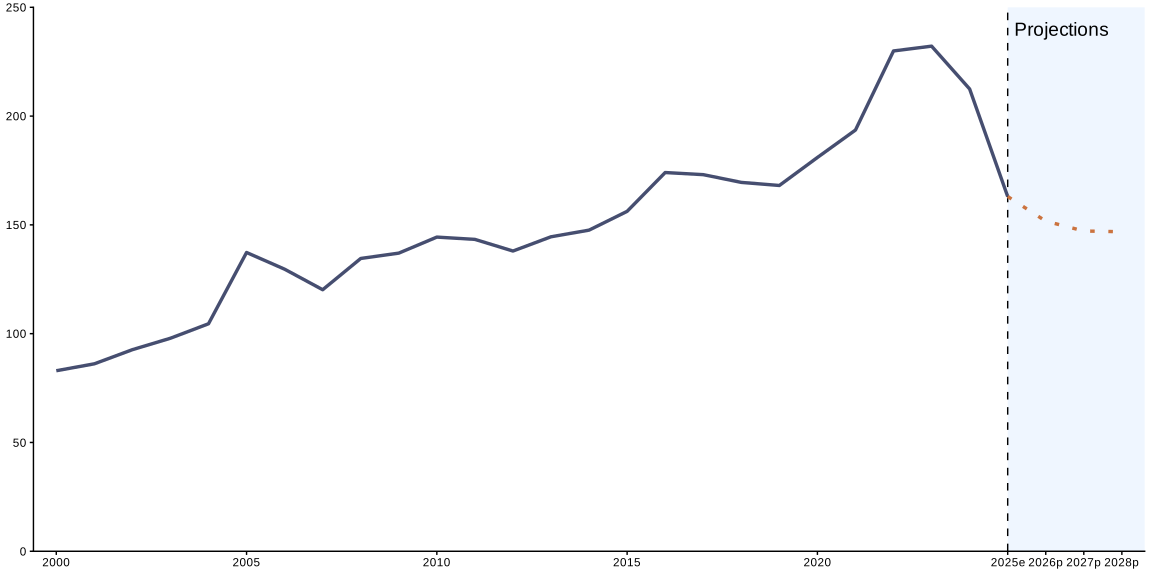
DAC countries’ net ODA is projected to fall by 6.9% in 2026, amounting to USD 152 billion – its lowest level since 2014 and, after the 23.3% drop in 2025 and 8.5% drop in 2024, a third consecutive annual decline. The projected amount in 2026 is equivalent to 0.23% of projected gross national income (GNI) in net terms, down from 0.25% in 2025. The cut in 2026 is broad-based: sixteen DAC members are projected to cut their ODA by a combined USD 12 billion, against USD 0.7 billion of increases projected by seventeen others, fourteen of which are EU members. The G7 accounts for USD 9.3 billion of the reduction.
The fall is expected to continue beyond 2026: by 2028, net ODA is projected to be 9.9% lower than it was in 2025, with the ratio slipping further to 0.21% of GNI. These cuts reflect policy choices: if DAC members were to hold their 2025 ODA/GNI ratios, total ODA would rise by 1.4% in 2026 rather than falling and would have stood 4.4% above its 2025 level by 2028 – instead of a projected 9.9% below. These projections reflect current inflation forecasts that could worsen in the case of a prolonged crisis in the Middle East, resulting in an upward revision to inflation that would further erode the real value of fixed aid budgets (Box 2).
Total net ODA from DAC member countries, 2000-24 (official data), 2025 (preliminary) and 2026-28 (projections), USD billion, constant 2024 prices
Source: OECD (2026[3]), Preliminary official development assistance levels in 2025, https://one.oecd.org/document/DCD(2026)8/en/pdf.
The crisis in the Middle East, ongoing since late February, is both a humanitarian emergency and macroeconomic shock. It is pushing up the prices of food, fuel, and fertiliser while slowing growth worldwide. It bears on ODA in two ways: it raises needs in the most exposed developing countries and it strains the budgets of development co-operation providers.
ODA has historically been stable and resilient in times of crisis. It grew by 38% across the two 1973-79 oil shocks and by 20% from 1982-90 during the debt crises, while also rising through the 2008 financial crisis (with a lag in 2011-12). Most recently, health spending during COVID-19 lifted total ODA by 15% from 2019 to 2021, and support to Ukraine, which increased from USD 1 billion in 2021 to USD 18.6 billion in 2023, drove total ODA up by 20%.
As of June 2026, following members’ answers to a dedicated DAC survey on their anticipated response to the crisis, the fiscal space to respond is largely absent. Most survey respondents do not expect the crisis in the Middle East to affect the level of their total ODA this year, though a handful reported a re-allocation towards or preservation of humanitarian aid in the Middle East region. None reported new measures to address the economic fallout of the crisis in developing countries.
Exposure to this economic fallout is greatest where few providers dominate (Figure 2). A single provider accounts for most ODA in several LDCs and small island developing states (SIDS), such as the United States in Marshall Islands and Micronesia, or Australia and New Zealand in Tonga and Tuvalu. These countries are also already facing multidimensional risks, with overlapping vulnerabilities that are reinforced through multiple channels (OECD, 2025[4]). In these countries especially, a shift in aid could therefore spill over quickly into broader macroeconomic and societal stress. Up to 45 million more people could face crisis-level food insecurity if the conflict runs past mid-year with oil above USD 100 a barrel, with the greatest risk in already-stressed importers such as Sudan and Somalia (WFP, 2026[5]).
Providers’ shares of total ODA in the ten LDCs and SIDS most dependent on energy and fertiliser imports, 2024

Notes: AFESD = Arab Fund for Economic and Social Development; AfDF = African Development Fund; ADB = Asian Development Bank; BCIE = Central American Bank for Economic Integration; CERF = Central Emergency Response Fund; EU Inst. = European Union Institutions; GAVI = Global Alliance for Vaccines and Immunization; GEF = Global Environment Facility; IDA = International Development Association; IDB = Inter-American Development Bank; IMF = International Monetary Fund (Concessional Trust Funds); OFID = OPEC Fund for International Development; UK = United Kingdom; USA = United States.
Sources: OECD (2026[6]),DAC2A: Aid (ODA) disbursements to countries and regions, http://data-explorer.oecd.org/s/ob; World Bank (2026[7]), World Development Indicators (database), https://datatopics.worldbank.org/world-development-indicators/; World Bank (2026[8]), World Integrated Trade Solution (database), https://wits.worldbank.org/.
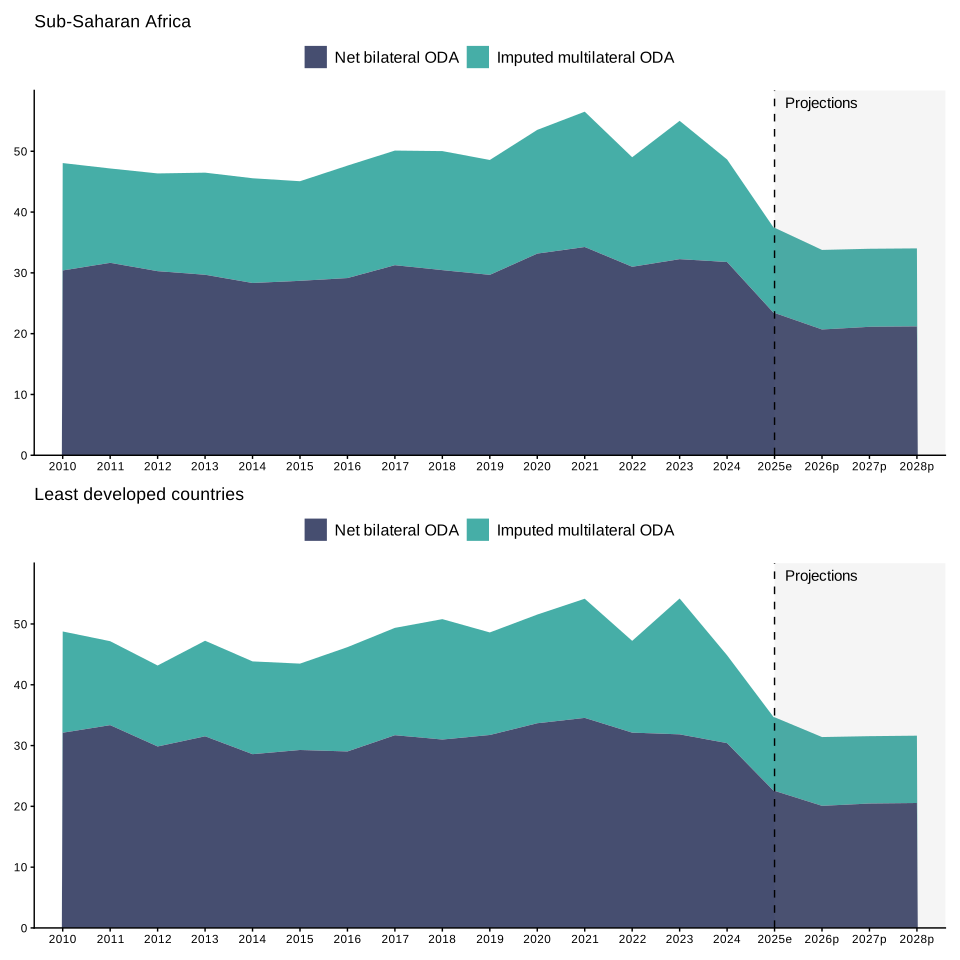
The deepest cuts are projected to fall on the countries least able to absorb them. DAC countries’ bilateral net ODA to sub-Saharan Africa is projected to fall by 11.6% in 2026, after a 26.3% decline in 2025; bilateral net ODA to LDCs, down by 25.8% in 2025, is projected to fall a further 10.9%. For both groups, this would be a third straight year of decline, leaving ODA at its lowest level since the early 2000s, at the start of the Millennium Development Goal era.
The cuts to these groups span many providers, but the burden is uneven. Cuts to sub-Saharan Africa and LDCs from G7 countries run above the DAC average – at 13.9% and 12.1% respectively in 2026 – while DAC EU members are less severe on average, at projected declines of 3.6% and 1.6%.
Multilateral channels are not filling the gap. Imputed multilateral aid2 to these groups is projected to fall by 6.6% each in 2026. Counting bilateral and multilateral aid together, total support to sub-Saharan Africa and LDCs would drop by 9.8% and 9.4%, respectively (Figure 3). Some providers have framed lower bilateral aid to these regions as a shift toward multilateral channels of delivery: in 2021-24, bilateral ODA to sub-Saharan Africa and LDCs declined by 7.2% and 12% respectively, while concessional outflows from multilateral organisations to these groups increased by 23.4% and 11.3% in the same period. However, data on projections suggest that absent a re-allocation toward multilateral organisations serving the poorest countries, multilateral ODA is not likely to offset the bilateral decline – especially as DAC members’ multilateral ODA is projected to decline for the third straight year, as discussed in the section, “Multilateral ODA is set to fall again in 2026”.
Net bilateral and imputed multilateral ODA for sub-Saharan Africa and LDCs from DAC countries, 2010-2025 (official data) and 2026-2028 (projections), USD billion, constant (2024) prices
Notes: Data from 2010 to 2024 reflect final statistics reported to the OECD. 2025 data are preliminary. 2026-28 values are projected.
Sources: OECD (2026[3]), Preliminary official development assistance levels in 2025, https://one.oecd.org/document/DCD(2026)8/en/pdf; OECD (2026[6]), OECD Data Explorer, DAC2A: Aid (ODA) disbursements to countries and regions, http://data-explorer.oecd.org/s/ob.
Cuts span every region and income group
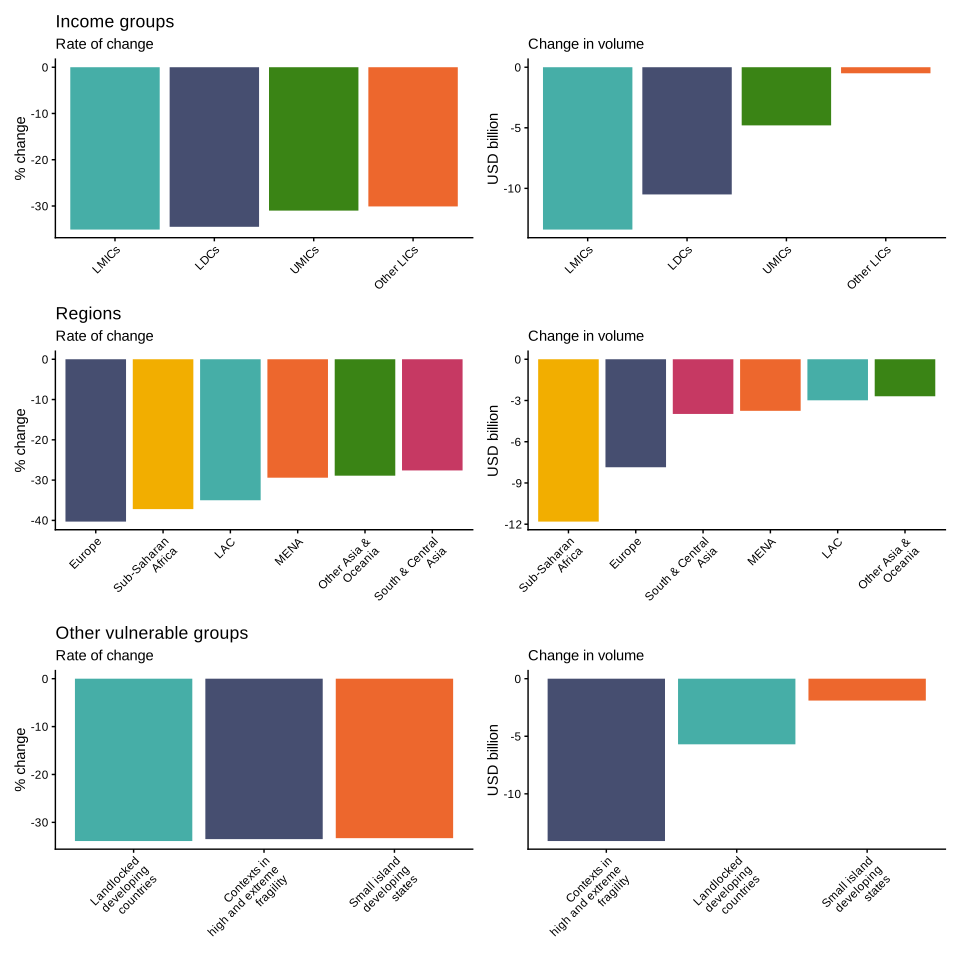
From 2024 to 20263, Europe shows the largest two-year projected decline (40.3%), of which 88.7% reflects lower aid to Ukraine, extending a fall from the 2022 peak. Excluding Ukraine, ODA to the rest of Europe is projected to fall by 29.1%, less than every region except South and Central Asia (-27.6%) (Figure 4).
Sub-Saharan Africa and Latin America and the Caribbean (LAC) show similar percentage cuts (37.2% and 35.0%, respectively), but the volumes diverge sharply: USD 11.8 billion is projected to leave sub-Saharan Africa by 2026, against USD 3.0 billion for LAC. The difference in volume matters because 32 of 49 (65%) of sub-Saharan African countries are also LDCs, against just 1 of 27 in LAC.
Cuts within sub-Saharan Africa are projected to be widespread, particularly to countries experiencing fragility. Aid to contexts in high or extreme fragility in the sub-continent is projected to fall by 37.9% from 2024 to 2026, and aid to the Sahel by 35.6%.
Every income group is affected by the cuts, particularly the lower-income countries (Figure 4). The largest two-year decline is projected for lower-middle-income countries (-35.1%), driven by the fall in aid to Ukraine, followed by LDCs (-34.5%); aid to upper-middle-income countries (UMICs) is projected to fall by 31.0%. The decline in volume amounts to USD 10.5 billion in LDCs and USD 4.8 billion in UMICs.
Small island developing states (SIDS) are among the hardest hit individually: five of the fifteen recipient countries with the largest cuts are SIDS, with declines between 2024 and 2026 reaching up to 60%. As a group, ODA to SIDS is projected to fall 33.3% from 2024 to 2026 – more steeply for Caribbean SIDS (-36.6%) and those in Asia and Oceania (-33.4%), while African small island states are less affected (-8.9%). Aid to landlocked developing countries and aid to fragile states are each projected to decline by 34% over this period.
In each case, most of the two-year decline is the projected 2025 drop – to be confirmed or revised when the activity-level data are published in December 2026 – rather than the smaller projected fall in 2026.
Projected change in net bilateral ODA from DAC countries by region and income group from 2024 to 2026p
Notes: MENA=Middle East and North Africa; LAC=Latin America and the Caribbean; LDCs=Least Developed Countries; LICs=Low-income countries; LMICs=Lower-middle income countries; UMICs=Upper-middle income countries.
Sources: OECD (2026[3]), Preliminary official development assistance levels in 2025, https://one.oecd.org/document/DCD(2025)6/en/pdf; OECD (2026[6]), OECD Data Explorer, DAC2A: Aid (ODA) disbursements to countries and regions, http://data-explorer.oecd.org/s/ob.
ODA to health is projected to decline further in 2026 and fall below pre-pandemic levels
Health faces the steepest cuts of all sectors. Net ODA for health and population services (hereafter, “health”) is projected to be up to one-third lower in 2026 than in 2019 and 63% below the 2022 peak – this represents a decline of 29-46%4 from 2024 to 2026, or USD 5-8 billion (Figure 5). This would pull health ODA well below pre-pandemic levels, back toward where it stood in 2008. Alongside funding cuts, ODA for health may also be affected by changes in how development co-operation for health is delivered.
Net bilateral ODA for health from DAC countries, 2002-2024 (official data) and 2025-2028 (projections), USD billion, constant (2024) prices

Notes: Data from 2002 to 2024 reflect final statistics reported to the OECD. 2025 sectoral breakdowns are estimated based on 2024 shares applied to preliminary total ODA. 2026-28 values are projected ODA.
Sources: OECD (2026[3]), Preliminary official development assistance levels in 2025 https://one.oecd.org/document/DCD(2026)8/en/pdf; (OECD, 2026[9]), CRS: Creditor Reporting System (flows), http://data-explorer.oecd.org/s/52.
The cuts will fall unevenly, concentrated where external financing for health matters most. Malawi and South Sudan, for example, each fund about 60% of current health expenditure from external sources (World Health Organization, 2025[10]); their bilateral health ODA is projected to fall by 50.8% and 42.4% from 2024 to 2026. Mozambique, Lesotho, and Uganda are similarly exposed, combining heavy reliance on external health finance – with particular dependence on G7 providers, the group responsible for the largest cuts – in countries with little space to raise domestic revenue.
Within the health sector, population and reproductive health – including HIV/AIDS and other STD control – faces the largest cut, with ODA projected to fall by up to 54.1% in 2026 against 2024. Funding for the control of communicable diseases is also under acute pressure. From 2024 to 2026:
ODA for malaria control is projected to fall by up to 59.6%;
ODA for tuberculosis control is projected to fall by up to 57.2%;
ODA for other infectious-disease control is projected to fall by up to 40.4%.
The cuts reach beyond response to preparedness. Funding for pandemic preparedness, prevention, and response (PPR) is essential not only for responding to disease outbreaks but also minimising disruptions to essential health services during outbreaks. Such funding is affected across sectors. For example, ODA for water supply and sanitation, which supports PPR, is projected to fall by 22.3% from 2024 to 2026.
The risk is most acute where outbreaks occur. In the Democratic Republic of the Congo and Uganda, which are facing an active Ebola outbreak at the time of writing, health aid is projected to fall by 46.6% (to USD 208.9 million) and 53.5% (to USD 234.8 million) respectively.
Humanitarian aid and governance support face the next deepest cuts
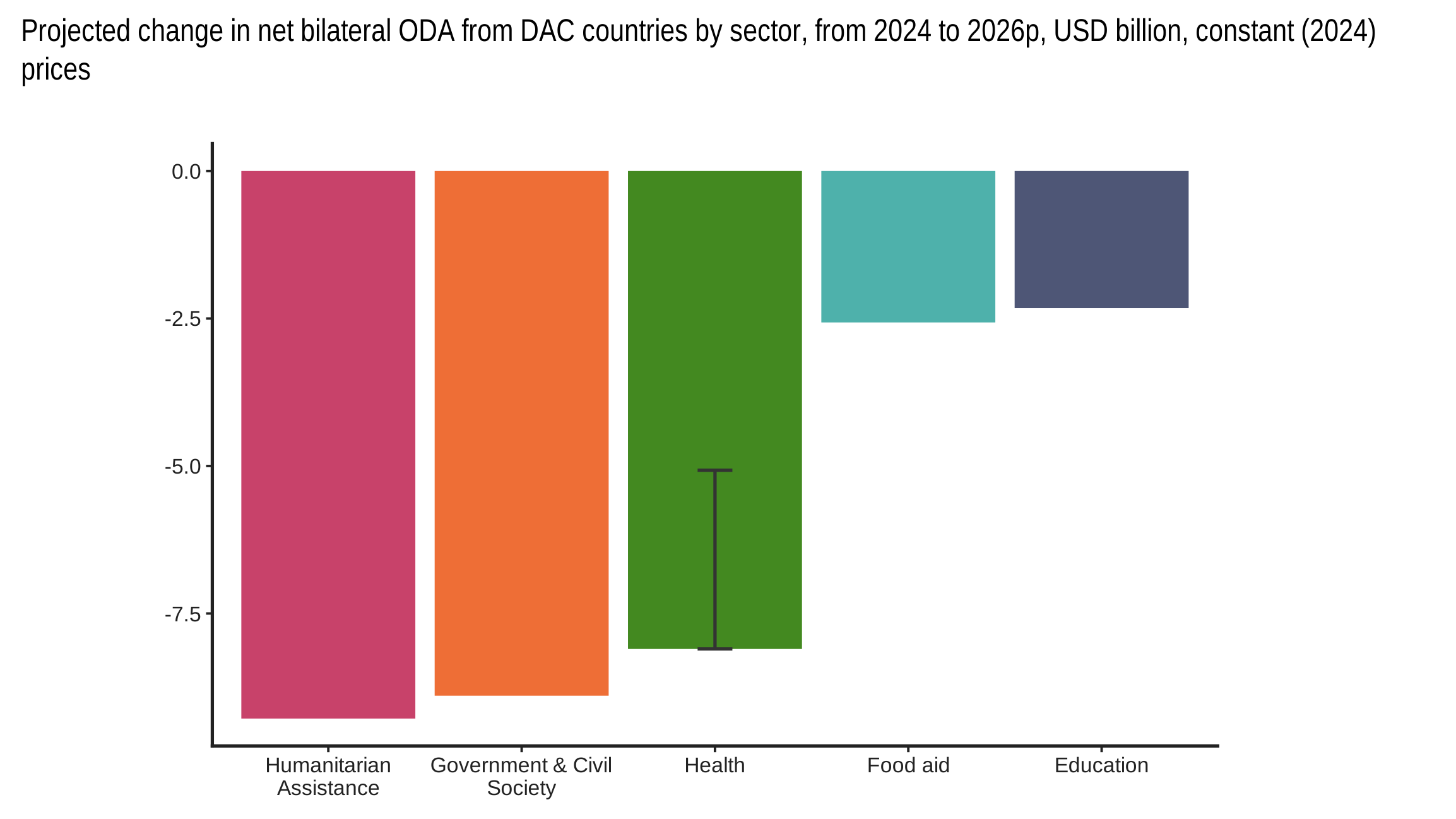
Ranked by the rate of decline, health leads (29-46% decline from 2024), followed by general budget support (43.0% decline, though this is volatile and driven by Ukraine) and humanitarian assistance (40.3%, a USD 9.3 billion fall) (Figure 6). Preliminary 2025 data already show humanitarian ODA down 35.8% in 2025. This impact across sectors is driven by the relative prominence of the providers making the largest cuts5.
ODA for government and civil society6 is projected to fall by 39.8% (USD 8.9 billion), largely because Ukraine, which received 37.8% of this sector’s ODA in 2024, is projected to see sharp reductions.
Net bilateral ODA from DAC countries by sector, 2018-24 (official data) and 2025-28 (projections), USD billion, constant (2024) prices

Notes: Data from 2018 to 2024 reflect final statistics reported to the OECD. 2025 sectoral breakdowns are estimated based on 2024 shares applied to preliminary total ODA. 2026-28 values are projected ODA.
Sources: OECD (2026[3]), Preliminary official development assistance levels in 2025 https://one.oecd.org/document/DCD(2026)8/en/pdf; OECD (2026[9]), CRS: Creditor Reporting System (flows), http://data-explorer.oecd.org/s/52.
Other sectors impacted by ODA cuts from 2024 to 2026 include:
ODA for education, projected to fall by 22.2%;
Food aid, projected to fall by 44.5% (USD 2.6 billion), with the United States – accounting for two-thirds of DAC food aid in 2024 – being the dominant provider;
ODA for energy, projected to fall by 22.6%.
DAC-EU members see milder sectoral cuts, largely driven by G7‑EU members: their steepest reductions as a group are in transport and storage (-25.9%), other social infrastructure and services (-17.8%), communications (-17.5%), and business and other services (-16.5%) in 2026 over 2024.
Multilateral ODA has broken from a long-standing trend of steady growth. Preliminary data show a 12.7% decline in net multilateral ODA from 2024 to 2025, leaving levels 28.4% below the 2023 peak. Volumes are projected to fall again by 3.4% in 2026, marking three years of consecutive decline. This would be the second-longest downward streak in the history of multilateral ODA, after a decline of 20% from 1992 to 1997.
Multilateral ODA from DAC countries, 2000-2024 (official data), 2025 (preliminary data) and 2026-2028 (projections), USD billion, constant (2024) prices

Notes: Data from 2000 to 2024 reflect final statistics reported to the OECD. 2025 data are preliminary. 2026-28 values are projected ODA.
Source: OECD (2026[11]), DAC1: Flows by provider (ODA+OOF+Private), http://data-explorer.oecd.org/s/9w.
The contraction in 2025 was uneven across institutions. Core funding to UN entities fell by 27%, the largest annual drop on record, while core support to the World Bank rose by 6.4% and to regional banks by 11.9%, reflecting disbursements from previous multi-year replenishment cycles. All institutions are projected to see cuts in 20267: the UN by a further 4.8%, the World Bank by 6.3%, and other regional development banks by 5%.
Compared to 2016, the year after the 2030 Agenda for Sustainable Development was adopted, UN funding is projected to be around 18% lower by 2028. The UN80 reform process is unfolding against this backdrop of substantially reduced core funding.
Target scarce resources to the poorest countries. Channel grants and highly concessional finance to the countries least able to afford basic services, including LDCs, sub-Saharan Africa, small island states, and contexts in high and extreme fragility. Recent trends show a growing disconnect between ODA allocations and the global distribution of extreme poverty. As budgets shrink and other development finance grows, ODA remains irreplaceable for protecting investments in poverty reduction and human development.
Plan exits responsibly and co-ordinate them. Abrupt withdrawals reverse development gains, break trust, and open gaps in essential services, above all in contexts affected by extreme and high fragility. DAC members should phase reductions and co-ordinate transitions with partner countries and other providers.
Make remaining resources, and wider policies, work harder for development. As volumes shrink, the share of ODA reaching partner countries matters more. DAC members should protect country programmable aid, concentrate funding where evidence shows the greatest impact, and make policies beyond aid – e.g., trade, investment, and private finance – more coherent in support of development.
References
[1] IMF (2026), World Economic Outlook, April 2026, International Monetary Fund, Washington D.C., https://www.imf.org/en/publications/weo/issues/2026/04/14/world-economic-outlook-april-2026.
[9] OECD (2026), CRS: Creditor Reporting System (flows), http://data-explorer.oecd.org/s/52.
[11] OECD (2026), DAC1: Flows by provider (ODA+OOF+Private), OECD Publishing, Paris, http://data-explorer.oecd.org/s/9w.
[6] OECD (2026), DAC2A: Aid (ODA) disbursements to countries and regions, OECD Publishing, Paris, http://data-explorer.oecd.org/s/ob.
[2] OECD (2026), Economic Outlook 119 (Edition 2026/1), OECD Publishing, Paris, https://data-explorer.oecd.org/vis?lc=en&df[ds]=DisseminateFinalDMZ&df[id]=DSD_EO%40DF_EO&df[ag]=OECD.ECO.MAD&pd=,&dq=.GDPV_ANNPCT.A&to[TIME_PERIOD]=false.
[3] OECD (2026), Preliminary official development assistance levels in 2025, OECD Publishing, Paris, https://one.oecd.org/document/DCD%282026%298/en/pdf.
[4] OECD (2025), States of Fragility 2025, OECD Publishing, Paris, https://doi.org/10.1787/81982370-en.
[5] WFP (2026), WFP warning becomes a reality for millions as Middle East crisis pushes poorest families further into hunger, World Food Programme, https://www.wfp.org/news/wfp-warning-becomes-reality-millions-middle-east-crisis-pushes-poorest-families-further-hunger#:~:text=In%20March%2C%20WFP%20projected%20that,This%20scenario%20is%20now%20unfolding.
[7] World Bank (2026), World Development Indicators (database), World Bank, Washington D.C., https://datatopics.worldbank.org/world-development-indicators/.
[8] World Bank (2026), World Integrated Trade Solution, World Bank Group, Washington D.C., https://wits.worldbank.org/.
[10] World Health Organization (2025), Global Health Expenditure Database (GHED), WHO, Geneva.
Contacts
Elena Bernaldo de Quiros (elena.BERNALDODEQUIROS@oecd.org)
Madeleine Lessard (madeleine.LESSARD@oecd.org)
Caroline Penn (caroline.PENN@oecd.org)
Lou Turroques (lou.TURROQUES@oecd.org)
Harsh Desai (harsh.DESAI@oecd.org)
← 1. On a net basis. On a grant equivalent basis, the official measure for headline ODA since 2018, ODA fell by 23.1% in 2025 and amounted to USD 174.3 billion, representing 0.26% of DAC countries’ combined GNI. Given that projections are on a cash flow basis, this policy brief refers to net ODA disbursements unless otherwise stated. For a more detailed analysis of preliminary 2025 ODA on a grant equivalent basis, see: https://one.oecd.org/document/DCD(2026)8/en/pdf.
← 2. Based on the OECD methodology to impute aid by multilateral bodies back to the funders of those bodies. For further details, see: https://www.oecd.org/en/data/insights/data-explainers/2024/10/resources-for-reporting-development-finance-statistics.html.
← 3. Comparisons are based on the application of 2024 shares (the latest year of final data) of bilateral ODA by provider for each region and income group to projected total ODA in 2026-28, with comparisons made from 2024-26. See Box 1 for a further explanation.
← 4. The higher and lower cut scenario reflect a range for the share of ODA allocated to health for the United States. The lower scenario assumes the sectoral allocation of ODA remains unchanged from 2024. The upper scenario assumes a higher proportion (30%) of ODA is allocated to health, based on Secretariat analysis of the FY26 International Affairs Budget.
← 5. As explained in Box 1, the relative prominence is based on 2024 official data; therefore, these projections assume that the sectoral allocation of ODA remains unchanged from 2024 and therefore do not account systematically for potential shifts in provider priorities. Authors have aimed to estimate such a potential shift in the health sector for the United States, which explains the range for health.
← 6. Consisting of sub-sectors pertaining to human rights, democratic participation, and public sector reform.
← 7. The projected breakdown by institutions in 2026-28 is based on shares to each institution, by provider, in 2025 (preliminary data).
This work is published under the responsibility of the Secretary-General of the OECD. The opinions expressed and arguments employed herein do not necessarily reflect the official views of the Member countries of the OECD.
This document, as well as any data and map included herein, are without prejudice to the status of or sovereignty over any territory, to the delimitation of international frontiers and boundaries and to the name of any territory, city or area.
The statistical data for Israel are supplied by and under the responsibility of the relevant Israeli authorities. The use of such data by the OECD is without prejudice to the status of the Golan Heights, East Jerusalem and Israeli settlements in the West Bank under the terms of international law.
Note by the Republic of Türkiye
The information in this document with reference to “Cyprus” relates to the southern part of the Island. There is no single authority representing both Turkish and Greek Cypriot people on the Island. Türkiye recognises the Turkish Republic of Northern Cyprus (TRNC). Until a lasting and equitable solution is found within the context of the United Nations, Türkiye shall preserve its position concerning the “Cyprus issue”.
Note by all the European Union Member States of the OECD and the European Union
The Republic of Cyprus is recognised by all members of the United Nations with the exception of Türkiye. The information in this document relates to the area under the effective control of the Government of the Republic of Cyprus.
© OECD 2026
 Attribution 4.0 International (CC BY 4.0)
This work is made available under the Creative Commons Attribution 4.0 International licence. By using this work, you accept to be bound by the terms of this licence (https://creativecommons.org/licenses/by/4.0/).
Attribution – you must cite the work.
Translations – you must cite the original work, identify changes to the original and add the following text: In the event of any discrepancy between the original work and the translation, only the text of original work should be considered valid.
Adaptations – you must cite the original work and add the following text: This is an adaptation of an original work by the OECD. The opinions expressed and arguments employed in this adaptation should not be reported as representing the official views of the OECD or of its Member countries.
Third-party material – the licence does not apply to third-party material in the work. If using such material, you are responsible for obtaining permission from the third party and for any claims of infringement.
You must not use the OECD logo, visual identity or cover image without express permission or suggest the OECD endorses your use of the work.
Any dispute arising under this licence shall be settled by arbitration in accordance with the Permanent Court of Arbitration (PCA) Arbitration Rules 2012. The seat of arbitration shall be Paris (France). The number of arbitrators shall be one.